
You started your blog full of energy. Maybe you knocked out three posts in week one, two in week two, and by week four, you were staring at a blinking cursor thinking, “Am I even doing this right? Should I be publishing more? Less? Every single day?”
Yeah. I’ve been there. And so has basically every beginner blogger, solopreneur, and small business owner I’ve ever worked with.
Here’s the thing nobody tells you upfront: you’re not struggling because you lack ideas or discipline. You’re struggling because you’ve never gotten a clear, honest answer to one of the most basic questions in content marketing.
How Many Blogs is a Good Amount, and How Often Should You Actually Publish?
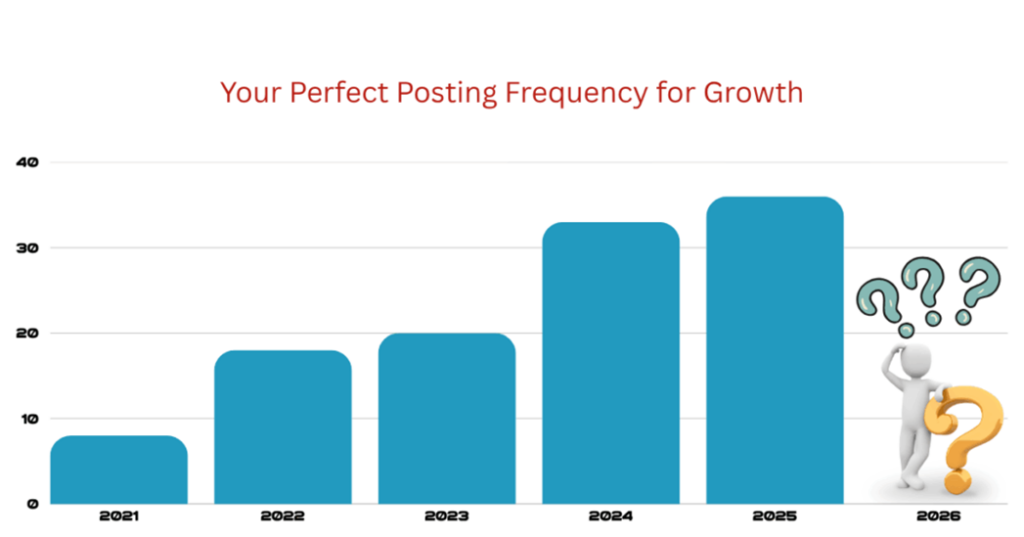
I’ve spent 15 years in digital marketing. I’ve built content strategies for solo coaches running one-person shows and for small businesses pushing content across multiple channels at once. And the single biggest mistake I see? People are copying someone else’s publishing schedule without understanding why that schedule works for that person.
So let’s fix that today, no fluff, no generic advice.
Hot Take First: Most Blogging Advice About Frequency Is Completely Wrong
Okay, let’s get controversial right out of the gate.
My bold opinion: Publishing frequency is the most overrated metric in blogging, and obsessing over it is actively holding you back.
Every week, someone publishes a study saying “blogs that post 16 times a month get 3.5x more traffic!” and thousands of beginner bloggers read that, panic, and try to publish every other day with zero strategy, zero keyword research, and zero energy budget for it.
Three weeks later? Burned out. Blog abandoned. Zero posts for 60 days.
Here’s what those studies don’t tell you:
- Those high-frequency publishers usually have dedicated content teams, not solo operators.
- Many of those “16 posts a month” are short, low-effort pieces padding the numbers.
- The traffic gains come from compounding quality content, not raw volume alone.
- A blog with 24 excellent posts almost always outperforms a blog with 96 mediocre ones.
The dirty secret of content marketing? One great post per week, published consistently for a year, will beat four rushed posts per week every single time. Fight me on that.
Why There’s No Universal Magic Number (But There Are Smart Ranges)
Before I tell you “how many blogs is a good amount, I will give you the real facts you need to get one thing straight.
Blog frequency isn’t a prescription. It’s a lever. How hard you pull that lever depends on your goals, your bandwidth, your niche’s competition level, and where you actually are in your blogging journey.
That said, here’s what real data shows:
- HubSpot found that companies publishing 16+ posts per month got 3.5x more organic traffic than those publishing 0–4 posts
- Orbit Media’s blogger survey shows that bloggers publishing 2–6 times per week report stronger results, but they also spend way more time per post
- Ahrefs data consistently shows that first-page rankings belong to sites with strong domain authority and a consistent publishing history, not just high volume
So more content can mean more traffic. But “more” is completely meaningless if your quality tanks in the process.
Consistency beats frequency. Every. Single. Time.
The 3-Phase Framework: Matching Blog Volume to Where You Actually Are
Let me break this down by your current stage because your stage matters more than any generic number someone throws at you.
Phase 1: The Foundation Stage (0–6 Months): Build Smart, Not Fast
If you’ve been blogging for less than six months, your gut is probably screaming, “Publish more, post every day, feed the algorithm!”
Don’t listen to it.
Right now, your job isn’t volume. It’s building topical authority and getting your technical foundation right.
Google doesn’t trust new websites immediately. There’s a phenomenon called the Google Sandbox, where new sites often struggle to rank for competitive keywords even with great content, simply because Google hasn’t decided to trust your domain yet. That trust-building phase typically takes three to six months.
Knowing that, here’s what actually makes sense right now:
Recommended: 1–2 posts per week (4–8 per month)
That’s manageable. That’s sustainable. And honestly, that’s exactly enough at this stage.
Use this time to focus on:
- Pillar content: Long-form, comprehensive posts (1,500–3,000 words) that cover your main topics.
- Long-tail keywords: Specific, lower-competition search phrases that a new site can rank for
- Content clusters: Supporting posts that link back to your pillar pages, building topical depth
- On-page SEO basics: Title tags, meta descriptions, internal links, and image alt text—small things that add up over time
At this stage, a single well-researched and optimized 2,000-word post is more valuable than five rushed 500-word posts.
Phase 2: The Momentum Stage (6–24 months): Now You Can Grow Faster
You’ve got 20–40 posts live. You’re seeing some organic traffic trickling in. A few posts are sitting on page two or three of Google, knocking on the door.
This is the inflection point. This is where bloggers either break through or plateau, and the difference almost always comes down to publishing velocity.
Recommended: 2–4 posts per week (8–16 per month)
Here’s why this range works so well right now:
Every new post is essentially another fishing line dropped into the search engine ocean. More lines mean more chances to catch traffic from diverse keywords and search queries.
But there’s another reason to scale up at this stage: content freshness signals. A consistent publishing routine, say, every Tuesday and Thursday, trains both Google and your readers to expect new content from you on a schedule. That regularity signals an active, credible site.
At this stage, start layering in:
- Cluster content: Posts that deepen coverage around your best-performing pillar posts
- Comparison and listicle posts: They capture commercial-intent searches really well
- Case studies: Real examples that naturally earn backlinks
- Content refreshes: Go back and update older posts with new stats, better structure, and stronger internal links
That last one? Wildly underrated. Updating a post hovering on page two can push it to page one faster than writing five new posts from scratch.
Phase 3: The Authority Stage (24+ Months): Quality Over Everything
At this point, you’re not building anymore; you’re compounding. Your domain has authority. You understand what resonates with your audience. You’ve got a backlink profile growing on its own.
Recommended: 3–5 posts per week, or strategic quality publishing
Wait, “or”? Yes. Because here’s the surprising truth: right now, some of your highest-ROI actions aren’t about writing new posts.
They are:
- Deep content audits that clean up underperforming posts
- Aggressive updates to posts with ranking potential sitting just outside the top 10
- Consolidating thin, overlapping posts into one comprehensive guide
- Doubling down on content types that are already driving conversions
The raw post count matters less here. What matters is having a real content strategy, not just a publishing schedule.
The Quality Threshold: The Line Your Posts Must Cross
Here’s a hard truth. All the frequency advice in the world collapses if your content doesn’t clear what I call the Quality Threshold, the minimum standard a post needs to compete in search results genuinely.
What does that actually look like?
| Quality Factor | Below Threshold | Above Threshold |
| Word count | Under 600 words on competitive topics | 1,200–3,000+ words with real depth |
| Keyword research | Writing without checking search intent | Targeting validated, specific queries |
| Search intent | Writing what you want to say | Writing what the searcher needs to find |
| Internal linking | No links to related posts | 3–5 relevant internal links per post |
| Originality | Paraphrasing what everyone else wrote | Original examples, insights, or data |
| Author credibility | Anonymous, no bio | Clear expertise signals, cited sources |
If your posts consistently fall below this line, publishing more frequently means more low-quality content out there with your name on it. Worse, Google evaluates your entire content portfolio. A site full of thin posts drags down rankings across the board.
One post per week that clears the threshold beats four posts a week that don’t.
How Many Total Blog Posts Should Your Site Have?
This is a different question from publishing frequency, and it trips up a lot of new bloggers. How many blogs is a good amount before my website actually starts getting traffic?
Here’s the honest answer:
- The 30-post benchmark: Most bloggers start seeing consistent organic traction somewhere between 30 and 50 posts. That’s not magic. It’s just enough content for Google to recognize topical relevance patterns.
- The 100-post milestone: Blogs with 100+ quality, indexed posts tend to hit a compounding traffic effect. Each post becomes a new entry point for search discovery.
- Niche competition changes everything: In a low-competition niche, 15 solid posts can earn real rankings. In a crowded niche like personal finance or digital marketing, you might need 50+ before organic growth meaningfully kicks in.
A practical floor for a new blog to feel credible to both Google and actual human readers is 20–25 well-written posts before you lean heavily into promotion or monetization.
The Solopreneur & Small Business Owner Reality Check
Let’s be real for a second.
You’re probably not a full-time blogger. You’re a local business owner, a freelance consultant, a life coach, or a solopreneur who’s trying to blog on top of running an actual business. You’ve got client work, service delivery, invoicing, and about 47 other things screaming for your attention. Trying to publish four posts a week will break you. And a broken content strategy publishes nothing.
Here’s what sustainable actually looks like for you:
Recommended: 1 high-quality post per week, every single week, for 12 months
That’s 52 posts in a year. For most local and service-based businesses, 52 well-optimized posts covering your core services, client FAQs, local SEO content, and industry insights are genuinely enough to drive leads, rank for local searches, and build real authority in your space.
And here’s your secret weapon when you’re short on time: The Content Repurposing Loop:
- Write one solid, in-depth blog post
- Pull 3–5 social media posts straight from it
- Use a key section as your email newsletter that week
- Record a short video or voice note summarizing the main point
- Come back in 6 months and update it with fresh data
One post, five distribution channels. Months of content mileage.
That’s leverage. And leverage is how solo operators compete with teams.
Blog Frequency by Business Type (Quick Reference)
| Business Type | Recommended Frequency | Top Priority |
| New personal blog | 1–2x per week | Pillar content + long-tail SEO |
| Local service business | 1x per week | Local SEO + FAQ-style content |
| Freelancer/consultant | 1–2x per week | Authority-building + case studies |
| E-commerce brand | 2–4x per week | Product-adjacent + buyer intent content |
| Solopreneur/coach | 1x per week | Conversion-focused + trust content |
| Intermediate niche blog | 2–3x per week | Content clusters + post update |
When Posting More Actually Backfires
This part doesn’t get nearly enough attention, so pay close attention here. There are specific situations where ramping up blog volume hurts your SEO instead of helping it:
Keyword cannibalization
Too many posts targeting similar keywords cause your own content to compete against itself. Google gets confused about which post to rank. Both underperform. It’s a mess.
Thin content piling up
Rapid publishing almost always leads to shallow posts. Google’s Helpful Content update specifically targets sites where content feels mass-produced or created for search engines rather than real people. Thin content can suppress your entire site’s rankings, not just the weak posts.
Crawl budget is getting wasted
For smaller sites, Google only crawls a limited number of pages per visit. Dozens of low-quality posts eat up that crawl budget, taking attention away from your best content.
Your audience is losing trust in you
If your readers notice quality slipping because you’re publishing too fast, they disengage. Email open rates drop. Return visits dry up. Social shares disappear.
The fix? Do a content audit every six months. Find posts getting zero traffic with no realistic ranking potential, then update, consolidate, or remove them. Clean house before you build more rooms.
Build Your Own Personal Blog Frequency Formula
Forget the generic advice. Here’s how to calculate your right number:
Step 1: Figure out how many hours per week you can realistically dedicate to content creation (writing, research, editing, basic SEO)
Step 2: Divide that by how long one quality post actually takes you (Beginners: 3–5 hours. More experienced writers: 1.5–3 hours)
Step 3: That’s your maximum sustainable frequency
Step 4: Set your actual target at 70–80% of that maximum because life happens, edits take longer than expected, and you need time to promote what you publish
Quick Example:
- Available hours per week: 6
- Time per post: 3 hours
- Maximum: 2 posts/week
- Your actual target: 1–2 posts/week
Simple.Honest. Something you’ll actually stick to.
The One Metric That Matters Way More Than Post Count
Traffic.Rankings. Domain authority.These all matter eventually.
But the metric that should be driving your blogging decisions right now is your publishing consistency score: the percentage of weeks in the last 12 months where you published at least one post.
A blogger who publishes once a week for 52 straight weeks builds more compounding momentum than someone who publishes five times a week for six weeks and then disappears for two months. Google’s algorithm rewards consistent signals. Your audience rewards consistent value.
Shoot for a 90%+ consistency score before you even think about increasing your frequency.
So, How Many Blogs Is a Good Amount?
Let’s make this crystal clear.
The short answer by stage:
- Beginner (0–6 months): 4–8 posts per month (1–2 per week)
- Intermediate (6–24 months): 8–16 posts per month (2–4 per week)
- Solopreneurs & small businesses: 4 posts per month done consistently and done well
- Any stage, any blogger: The number you can sustain at quality without burning out
The real answer:
It’s not about hitting a magic number. It’s about finding the frequency where you’re publishing your best work, showing up reliably, and having the energy to promote what you publish.
Start where you are. Be honest about your bandwidth. Publish consistently at a pace you can hold for 12 months straight. Then and only then think about scaling up.
Because after 15 years in this industry, here’s what I know for certain: the blogs that win aren’t the ones that publish the most. They’re the ones that kept showing up, kept improving, and never confused being busy with making progress.
Now close this tab and go write your next post. Which stage are you in right now: Foundation, Momentum, or Authority? Drop your current publishing frequency in the comments, and I’ll personally give you a recommendation for your next 90 days.