
In this article, we shall attempt to understand “what is search engine optimization”. Also referred to as SEO, search engine optimization is the technique of improving a website’s or its content’s visibility so that it ranks high in Google’s and other search engines’ search results. It involves a set of practices to be followed to improve the website’s visibility organically on Google’s search engine result pages.
By optimizing both the content and the technical structure of a website, SEO helps improve its ranking organically, without relying on paid advertisements. Understanding search engine optimization is essential for anyone looking to increase their online presence, attract relevant traffic, and grow their business in the highly competitive digital landscape. This article will guide you through the key practices and principles that make search engine optimization an important tool in today’s online marketing ecosystem.
What is Search Engine Optimization
Organic traffic, although a little difficult, is the backbone of any website because it responds directly to the users, searching for a particular product or service. So, it is essential to understand the value of search engine optimization.
The questions of users are best addressed through SEO-optimized content, which plays a vital role in increasing engagement and driving business growth. When you implement SEO effectively, it enhances both the visibility and relevance of your content. This is why successful companies often hire search engine optimization experts or collaborate with professional SEO agencies to promote their brands, investing in high-value SEO packages to achieve long-term results.
There is tough competition between businesses on Google’s search engine results page (SERP). To be visible on Google’s first page is the priority of every individual organization. Since many websites are being listed every day, Google can’t show all of them on the first page.
Google has algorithms that have different ranking parameters and play a vital role in deciding a website’s position. Search engine optimization helps meet the requirements of these parameters, and therefore is an important and integral part of the digital marketing strategy.
Why Search Engine Optimization Matters
Organic traffic, although more challenging to achieve, is the backbone of any website because it comes directly from users who are searching for a specific product, service, or information. This is why it is crucial to learn SEO and how it can help you generate traffic without paying for ads.
SEO-optimized content responds to users’ queries effectively. It helps brands get high engagement, increase conversions, and capture more business opportunities. For SEO for beginners, following a step-by-step guide can make the process much easier. When you’re doing SEO correctly, your content becomes more visible and relevant to both search engines and users. This is the reason why successful businesses hire SEO (search engine optimization) experts or partner with SEO agencies and often invest in premium SEO packages.
How Search Engine Optimization Works
To scan and gather data from web pages, search engines such as Google use automated programs known as bots, spiders, or crawlers. The purpose of these crawlers is to evaluate your website and assess its relevance to user queries. To decide which websites should appear first, they look at hundreds of ranking factors such as content quality, backlinks, site speed, and user experience. Search engine optimization improves the visibility of your website by enhancing these elements.
In simple words, when you ask yourself, What is search engine optimization? and how does it work? The answer is to optimise these factors so that your website can get higher visibility and better organic rankings.
A common question that arises is whether SEO can be done without a website. While most strategies focus on optimizing websites, it’s also possible to do SEO without a website by leveraging platforms like YouTube, Google Business Profile, and social media to enhance your digital visibility. Understanding the difference between SEO and SEM is also crucial, as both play a significant role in SEO in digital marketing strategies.
Another crucial factor in Search engine optimization success is understanding “how to reduce the spam score of a website”. The authority and ranking of your website may suffer due to a high spam score. To lower it, businesses should focus on:
- Creating high-quality content
- Earning backlinks from reputable sources
- Removing toxic links
- Following ethical SEO practices.
Keeping spam score low is essential for building trust and boosting overall search engine optimization performance.
4 Major Steps of SEO
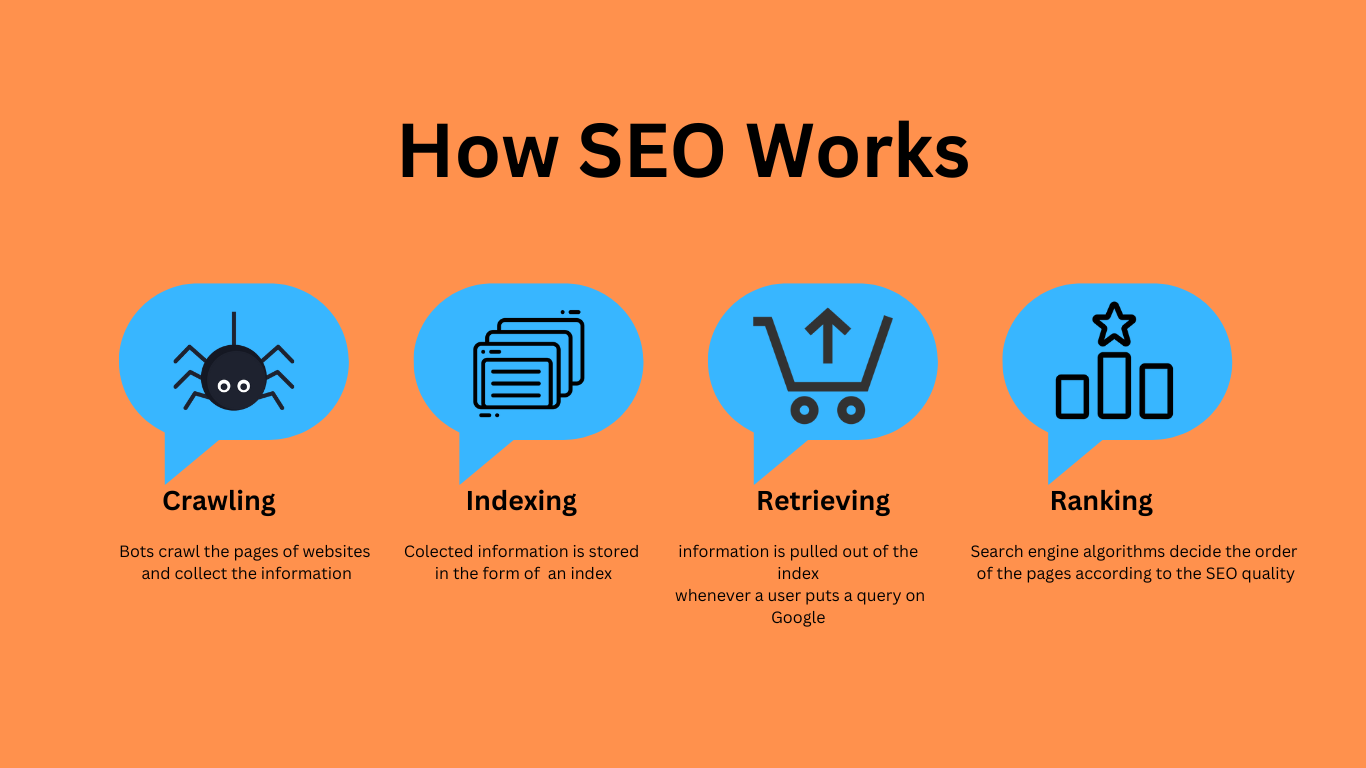
The complete SEO process can be understood in four key steps: Crawling, Indexing, Retrieving, and Ranking.
1) Crawling
Crawling is the process by which search engine bots, commonly referred to as spiders or crawlers, visit websites and URLs to gather data. To determine the purpose of your website, crawlers follow links on it and review every accessible page. Submitting a proper XML sitemap and maintaining good internal linking is a critical part of effective search engine optimization and help bots navigate your website more efficiently.
Search engines will visit your website more frequently if you consistently post original, high-quality material. Frequent updates improve organic ranking by letting search engines know that your website is active, which increases the chances of indexing. A well-structured website with clean navigation, optimized URLs, and no broken links ensures smoother crawling and better Search engine optimization performance.
2) Indexing
Indexing is the process by which collected data is stored in a search engine’s database, serving as the first step in search engine optimization. Publishing fresh, high-quality content more frequently encourages search engines to crawl your site regularly, signaling activity and relevance, which ultimately improves your overall rankings.
For any digital marketing strategy, indexing is the very foundation of visibility. If your content isn’t indexed, it essentially remains invisible to potential visitors. Imagine writing a book but never placing it on a shelf where readers can find it—that’s what happens when content isn’t indexed. Proper indexing ensures your content is available, searchable, and ranked according to its relevance and quality.
Best Practices for Better Indexing
To maximize the benefits of indexing and strengthen your SEO efforts, follow these best practices:
- Submit an XML Sitemap: An updated sitemap helps search engines discover your pages more efficiently. Direct submission of sitemaps is possible with tools such as Google Search Console.
- Use Internal Linking: Linking other relevant pages in the website ensures that bots can crawl your site more effectively, helping spread link equity across your domain.
- Avoid Duplicate Content: Duplicate or thin content may prevent certain pages from being indexed.
- Optimize Page Speed and Mobile Friendliness: Fast-loading, mobile-friendly websites encourage more crawling and quicker indexing.
- Use Schema Markup: This helps search engines understand your content contextually, which can improve how your pages are displayed in search results.
Indexing is not just a technical step; it is the gateway through which your website gains visibility. In the broader context of search engine optimization, combining strong technical foundations with fresh, consistent, and high-quality content encourages search engines to crawl and index your site more frequently. Over time, this activity improves your site’s relevance, authority, and rankings—ultimately driving more organic traffic and enhancing your overall digital presence.
3) Retrieving
Whenever a user searches for something, search engine bots retrieve the most relevant results from the index library. This step is driven by search engine algorithms that evaluate user intent, keyword relevance, and website authority.
Pages with high-quality content, proper keyword usage, and trusted backlinks are more likely to appear at the top of organic search results. Retrieval is the stage where your SEO efforts finally pay off, as users see your site on the Search Engine Results Page (SERP).
In simple words, retrieval is the stage where all the effort you put into creating valuable content and optimizing your site pays off, as search engines present your website to users who are looking for the exact information you offer.
4) Ranking
Once your website’s pages are indexed, the next critical step is ranking. The order in which your pages show up in search results is determined by the ranking process. Search engines use complex algorithms that evaluate numerous factors to decide which pages best satisfy a user’s query. Some of the most important ranking factors include:
- Keyword Placement: Strategically placing relevant keywords in titles, headings, meta descriptions, and throughout the content signals to search engines what the page is about. Proper keyword usage ensures that your page matches user intent effectively.
- Content Relevance and Quality: Search engines prioritize content that thoroughly addresses the user’s query. Pages with precise, organized, and informative content are more likely to rank higher.
- Location and Local SEO Signals: For queries with local intent, search engines consider the user’s location and the business’s proximity. Optimizing for local search can help attract nearby customers and increase visibility in local search results.
By combining consistent content creation with strong on-page and off-page SEO (search engine optimization) strategies, you significantly improve your chances of ranking higher. Higher rankings lead to increased visibility, more organic traffic, and ultimately greater opportunities for engagement, conversions, and business growth.
Types of SEO
Three primary types of SEO clearly explain search engine optimization in practice, as each type contributes differently to improving website visibility. On-page SEO focuses on optimizing individual web pages with relevant keywords, high-quality content, proper headings, and internal linking to make them more search-friendly.
Off-page SEO emphasizes building authority through backlinks, social signals, and brand mentions across the web, which help search engines recognize a site’s credibility. Technical SEO, on the other hand, ensures that the website’s structure, speed, mobile-friendliness, and crawlability meet search engine requirements. Together, these three components create a strong foundation for higher rankings, greater organic traffic, and long-term digital growth.
On-Page SEO
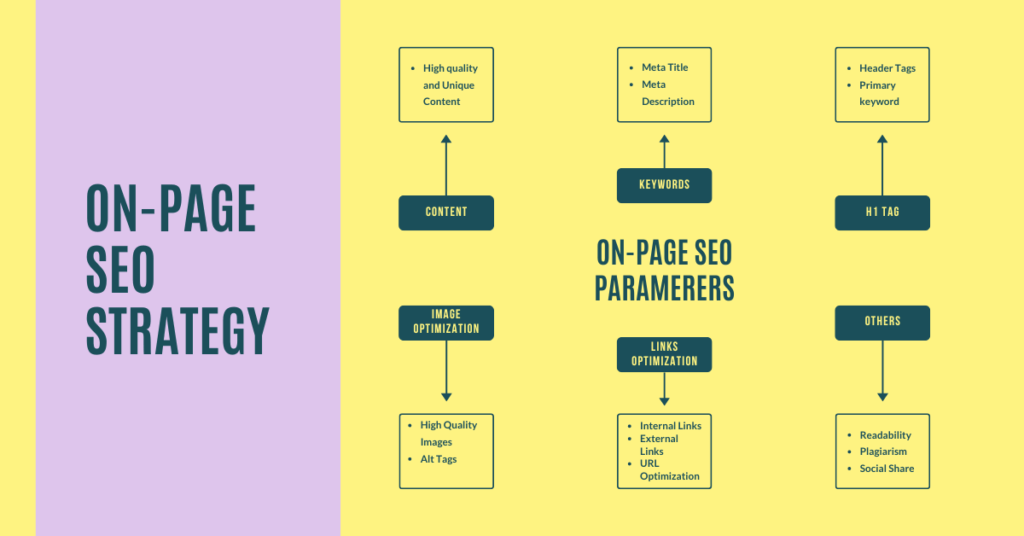
Optimizing website components to improve organic ranking is the primary goal of on-page SEO, and it forms the foundation of effective search engine optimization. This process involves refining elements such as meta titles, descriptions, headings, and keyword placement to ensure search engines clearly understand the relevance of each page.
Additionally, on-page SEO focuses on creating high-quality, user-centric content, improving internal linking structures, and adding image alt texts to enhance both accessibility and visibility. When implemented correctly, on-page SEO not only boosts rankings but also delivers a seamless user experience, making it a crucial step in the broader strategy of search engine optimization. Key practices include:
- Writing valuable, keyword-rich content
- Using H1, H2 and H3 heading for better readability
- Optimizing meta titles and meta descriptions
- Adding internal and external links
- Using images with Alt text
- Improving page speed and relevancy
Tools like Yoast SEO for WordPress make on-page optimization easier by providing actionable recommendations.
In simple words, On-page SEO, or on-page optimization, is writing valuable and unique content to improve the ranking of the website organically. Make content keyword-rich using proper headings, internal links, external links, and distribution of primary and secondary keywords throughout the whole content.
Use focus keywords in the meta title and meta description. Use images with alt text wherever needed. Focus on page speed, content readability, relevancy, and user search intent. An SEO plugin, namely Yoast SEO, can help a lot with all these functions.
Off-Page SEO
Off-page SEO focuses on building authority outside your website. Core strategies include:
- Backlink creation through guest posting
- Social media marketing and influencer outreach
- Directory submissions and Forum participation
- PR campaigns to improve brand credibility
These efforts improve your website’s domain authority and trustworthiness, which ultimately leads to higher rankings.
Technical SEO
In this process, the focus is mainly on the technical aspects of the website while keeping user experience at the core. Technical SEO ensures that search engines can efficiently crawl, interpret, and index your site without issues. It covers critical elements such as website speed, mobile responsiveness, secure HTTPS implementation, XML sitemaps, and proper URL structures.
A well-optimized technical foundation prevents errors like broken links or duplicate content, which can otherwise hinder search engine optimization rankings. By aligning technical performance with user-friendly design, technical SEO creates a seamless experience for visitors while supporting the broader goals of search engine optimization—improved visibility, higher rankings, and sustainable growth in organic traffic.
It involves:
- Optimizing the XML sitemap
- Fixing broken links and redirect issues
- Improving page load speed
- Mobile friendliness and responsive design
- Image compression with proper alt text
Supporting SEO Strategies
To support the above factors, we employ additional methods for ranking a website as follows.
Keyword Selection
- Perform thorough keyword research using tools like Google Keyword Planner or Semrush
- Analyze competitors to find high-performing keywords
- Target long-tail keywords to capture niche traffic
A thorough keyword research process is the backbone of effective search engine optimization. It involves identifying and selecting the most desirable keywords that have the potential to drive targeted traffic and improve rankings. By analyzing top-performing competitors’ websites, businesses can gain valuable insights into which high-performing keywords are contributing to their success.
This competitive analysis not only highlights keyword opportunities but also uncovers gaps that can be strategically leveraged. While high search volume keywords are essential for building visibility, it is equally important to balance them with long-tail, low-competition keywords to achieve sustainable growth.
When aligned with a strong search engine optimization strategy, this combination ensures that your website attracts the right audience, stays ahead of competitors, and strengthens its presence in organic search results.
1) Creating Unique Quality Content
After the keyword selection is done, the next focus should be on creating valuable content. Websites with content relevant to the user’s queries are most likely to be ranked on Google’s SERP. Including focus keywords in the page’s title and description helps users understand the relevancy of the content. It is also important that the content be original and not plagiarized.
2) Using Images With Alt Text
Alt text serves to explain what an image is about. This helps Google bots understand what a particular image represents. Sometimes it takes a bit more time to load an image on the page. Alt text then helps in determining the image’s relevance. Additionally, it helps to input more keywords.
3) URL (Slug) Optimization
The particular part of the URL that is unique to each webpage is called the slug. It not only identifies the page but also provides users with a clear idea of the content they can expect. From an SEO (search engine optimization) perspective, slugs play an important role in improving both user experience and search engine rankings.
A well-structured slug that includes relevant keywords makes the URL more descriptive, easy to read, and shareable. For example, a slug like “search-engine-optimization-tips” is far more effective than one filled with random characters or numbers.
By keeping slugs concise, keyword-rich, and relevant to the page content, businesses can enhance their website’s visibility and help search engines better understand the context of the page.
4) Pay-Per-Click
Pay-per-click (PPC) is a form of paid advertising designed to quickly drive targeted visitors to a website by increasing its visibility on search engines. In this model, advertisers pay a certain amount to Google each time a user clicks on their ad, ensuring the website appears prominently on the first page of the SERP. While PPC delivers instant traffic, it is most effective when combined with search engine optimization, which builds long-term organic visibility.
Unlike PPC, search engine optimization focuses on improving rankings through high-quality content, keyword optimization, backlinks, and technical improvements. When businesses use both strategies, they can achieve both immediate exposure and sustainable growth, ensuring maximum reach and return on investment.
- Although SEO concentrates on organic traffic, PPC advertisements can offer instant exposure.
- ROI for digital marketing is increased when SEO and PPC are combined.
Best SEO Tools
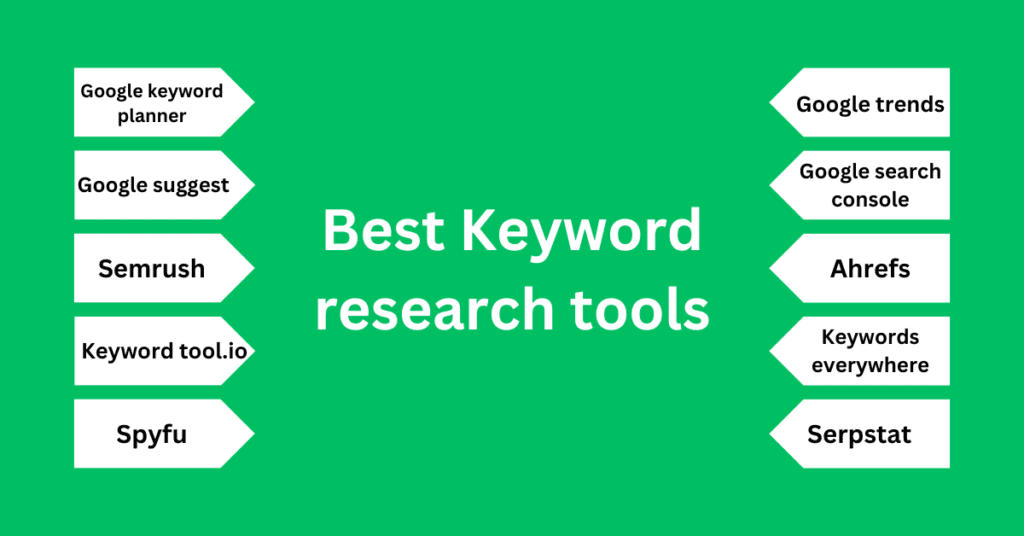
Many tools provide recommendations for the SEO of a company and help improve the ranking of the website. These tools assist in evaluating the performance of your website and making necessary optimizations by comparing it to other websites that rank highly. They help in researching top-performing keywords and developing SEO (search engine optimization) strategies.
Some of the best are mentioned below.
Yoast SEO
Yoast SEO is one of the most widely used tools for on-page optimization, especially for websites built on WordPress as a CMS. This plugin is available for free, with a premium version offering additional advanced features. As part of its core functionality, Yoast SEO enables users to define and optimize key elements such as the meta title, meta description, and slug (the specific part of a URL), all of which are crucial for an effective search engine optimization strategy.
Beyond these basics, the tool also provides a detailed checklist of on-page factors, including keyword usage, readability analysis, internal linking suggestions, and schema integration. Website owners can make sure that their content is both search engine-friendly and user-friendly by considering these suggestions.
In short, Yoast SEO acts as a practical guide to implementing best practices of search engine optimization, helping even beginners create well-optimized pages that rank higher in search results.
Google Search Console
Google Search Console is a free tool provided by Google that offers valuable insights into a website’s performance in search results. It delivers up-to-date, real-time data on various aspects of search engine optimization, helping website owners understand how their site is being crawled, indexed, and ranked.
With this tool, users can track website traffic, monitor keyword performance, and identify which queries are driving the most impressions and clicks. Additionally, it highlights indexing issues, mobile usability errors, and security concerns that may impact a site’s visibility. One of its most powerful features is the ability to submit sitemaps and request indexing for new or updated pages, ensuring faster recognition by search engines.
By leveraging Google Search Console effectively, businesses can optimize their content strategy, improve page rankings, and achieve the best possible results on the SERP.
Google Trends
Google offers an entirely free and versatile tool called Google Trends, which is invaluable for content creators and marketers aiming to improve their search engine optimization strategy. This tool identifies trending topics worldwide, helping users discover what is currently popular in various industries and niches. By analyzing trends, it becomes easier to select high-interest topics that can attract more organic traffic to a website.
Google Trends also allows users to uncover popular long-tail keywords related to specific niches, providing opportunities to target precise search queries that competitors may overlook. Additionally, the tool offers keyword comparison features, enabling marketers to evaluate which terms are gaining more attention and should be prioritized in content strategies.
By incorporating insights from Google Trends into your content planning, you can create timely, relevant, and highly optimized material that resonates with audiences and enhances overall search engine visibility.
HubSpot
HubSpot offers another free and highly useful tool that generates a comprehensive report card of a website’s performance, providing actionable insights for improvement. This tool evaluates multiple aspects of your website, including page speed, mobile responsiveness, and overall user experience. It clearly indicates whether a site is optimized for mobile devices, ensuring that visitors have a seamless browsing experience across all screen sizes.
Beyond measuring website performance, HubSpot also provides valuable security recommendations, including the implementation of HTTPS and the identification of vulnerabilities that could compromise site security.
By following these insights, businesses can enhance both the technical and on-page aspects of search engine optimization, ultimately improving their website’s visibility, credibility, and ranking on search engine results pages.
Frase
Frase is a paid, AI-based tool designed to streamline article writing and content optimization. It goes beyond simple content creation by helping users conduct in-depth keyword research, generate high-quality articles, and optimize existing content for maximum impact. The tool allows marketers and writers to plan the structure and key points of their content, ensuring that each piece is well-organized and aligned with audience intent.
With Frase, users can quickly identify content gaps, analyze competitors’ top-performing articles, and create SEO-optimized material that ranks higher and engages readers effectively. Its intuitive interface and AI-driven recommendations make it an invaluable asset for anyone looking to produce professional, data-driven content efficiently.
Bing Webmaster Tool
Bing Webmaster Tools is a valuable platform that assists website owners in managing how their content is crawled, indexed, and displayed on the Bing search engine. It enables users to submit sitemaps, monitor website performance, and identify issues that might affect visibility. The tool provides detailed data on clicks, impressions, and search queries, allowing site owners to analyze trends and optimize their strategies accordingly.
Additionally, Bing Webmaster Tools offers diagnostic features to detect broken links, malware, or other technical issues that could impact user experience. By leveraging these insights, website owners can improve the overall structure, performance, and accessibility of their site, ultimately enhancing its chances of achieving higher rankings and better engagement in Bing search results.
Spyfu
The primary purpose of the SpyFu keyword research tool is to analyze competitors’ websites and uncover valuable insights that inform a strong search engine optimization strategy. SpyFu provides comprehensive and detailed data about competitors’ online presence, including the paid ads they are running, their organic search rankings, top-performing keywords, and even the backlinks they have generated.
By examining this information, businesses can identify opportunities to outperform competitors, target high-value keywords, and optimize their content for better visibility in search results. Additionally, SpyFu allows marketers to track historical trends, evaluate competitors’ advertising budgets, and uncover gaps in their own SEO efforts.
Integrating SpyFu insights into your optimization strategy can help in crafting more targeted campaigns, improving rankings, and driving sustainable organic growth.
SEMrush
SEMrush is a paid, premium tool that is widely trusted for its powerful capabilities in keyword research and online ranking analysis. It allows businesses to closely monitor competitors’ keyword strategies, uncover high-performing search terms, and identify opportunities to outperform rivals.
Beyond keyword research, SEMrush is also extensively used for conducting thorough SEO (search engine optimization) audits, helping website owners detect issues related to site structure, content quality, and technical performance.
The tool provides detailed insights into backlink profiles, allowing marketers to track existing backlinks, identify new link-building opportunities, and evaluate the authority of referring domains. By leveraging SEMrush, businesses can develop data-driven SEO strategies, optimize their content and technical setup, and stay ahead of competitors in search engine rankings.
Ahrefs
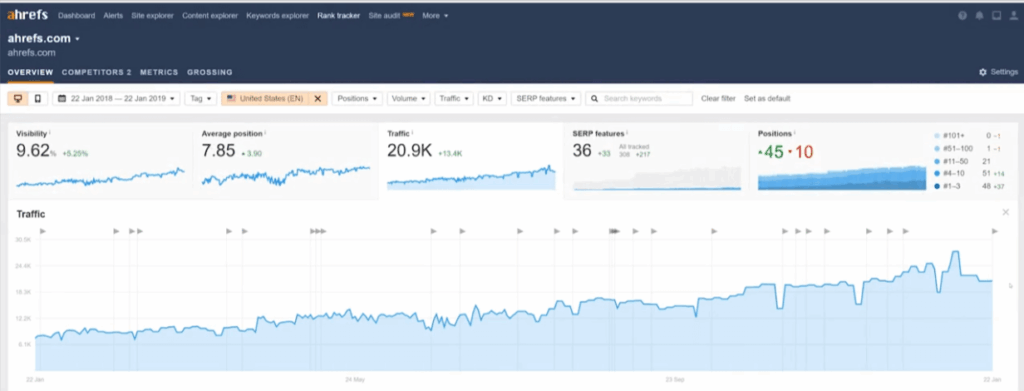
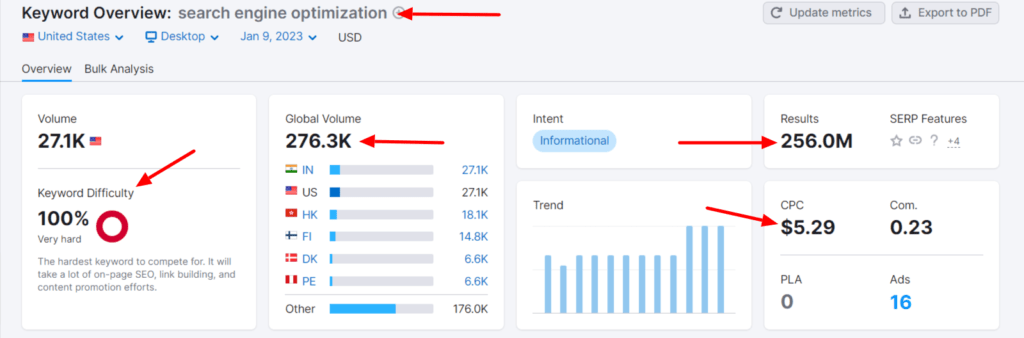
If you have ever asked yourself, What is search engine optimization, the answer lies in finding the right keywords that connect your content with your audience. This is where tools like Ahrefs become invaluable. Ahrefs goes beyond just showing keyword ideas—it provides detailed insights into search volume, keyword difficulty, and traffic potential.
With features like competitor analysis and SERP breakdowns, it helps you understand which keywords are realistic to target and how they can drive long-term organic growth. By using Ahrefs, you can bridge content gaps, uncover untapped opportunities, and build an SEO strategy that is both practical and effective. This paid SEO audit tool, which has an unfailing user interface, is also utilized to increase website traffic.
Conclusion
Understanding search engine optimization is the first step toward building a strong online presence. SEO is not a one-time effort but an ongoing process that requires consistent content creation, technical optimization, and strategic promotion. Whether you are a small business owner or a digital marketer, focusing on ethical SEO practices will help you achieve sustainable organic growth and stay ahead of competitors.



Pingback: What is Google Ads | how does it benefit businesses
Pingback: Content Writing Tips For Beginners | ( A guide) | Proven strategies