If you have a website, you should be familiar with the basics of search engine optimization. Every website must be optimized according to Google’s algorithms to rank on Google’s SERP. To get a higher ranking, we need to focus on three primary aspects of SEO. These are On-page SEO optimization, off-page strategy, and technical optimization. Among these, on-page SEO plays a direct role in the ranking of a website on Google’s SERP. In this article, we will discuss what is on-page SEO optimization.
I am a digital marketing consultant, web content developer, and on-page SEO expert. I have been crafting SEO-optimized content for websites. I have spent years helping businesses create SEO-friendly content that not only ranks but also helps engage users with the website. This article mainly focuses on optimizing the website for better ranking in Google’s search results with the help of daily SEO tasks. Let’s understand what on-page SEO optimization is in digital marketing and what the on-page SEO techniques are.
What is On-Page SEO Optimization
Before discussing on-page SEO optimization, let’s see the difference between on-site and off-site SEO.
On-page SEO optimization is also referred to as on-site optimization or on-site search engine optimization. The procedure involves making the website faster and mobile-friendly. Also, we make the URLs and the page’s content easily readable, engaging, and user-friendly. In on-page SEO, we are doing internal optimizations of our website. It represents the changes we are making to the website to make it SEO-friendly. There are several tools available for on-site optimization of web pages.
In off-page or off-site optimization, we mainly optimize outside the website. One of the major activities is link building. We will discuss off-site SEO activities in another article. Here, our focus is on on-site SEO. Also, we will learn how to protect your website from negative SEO.
Advantages of On-Page SEO
On-page SEO helps make an overall website ranking strategy and is the backbone of every website. We optimize the elements of our website, such as meta titles, meta descriptions, page content, internal links, external links, and URLs, to help search engines better understand the website’s content. We must present high-quality and unique content, combined with the right keyword strategy, to attract an audience and achieve a good search engine ranking. Search engines use these parameters to check the page’s relevancy before showing it in search results. Thus, we can get more traffic and conversions with the right on-page SEO strategy.
On-Page SEO Parameters
Several parameters decide the ranking of a website, like
- High-quality, unique, and relevant content
- Primary keyword (focus keyphrase)
- Title tag or meta title
- Meta description
- Header tags
- Images with alt tags
- Internal links
- External links
- Readability
- Plagiarism-free content
- URL optimization
- Social Share
Let us understand these parameters one by one.
High Quality, Unique, and Relevant Content
Writing good quality and relevant content is the most crucial parameter for on-page SEO optimization. Search engines like Google always give preference to the content that provides value and solutions to the user queries. Content should be well-written, relevant to your niche, and informative to attract users to your site.
It should be able to answer users’ queries. You must write engaging and well-defined content. It reduces bounce rate, and it also tells Google that the page/post is trustworthy and useful. That will also improve your page’s search engine rankings.
By high-quality content, we mean that it should be engaging, easy to read, and well-structured with proper headings, subheadings, and bullet points. Use a mix of primary and secondary long-tail keywords. Introduce multimedia elements such as images, infographics, and videos in the content.
Along with writing good-quality content, you must follow a routine of daily SEO tasks.
These tasks include:
- Updating old content.
- Optimizing meta tiles and meta descriptions.
- Monitoring keyword performance.
- Improving page load speed.
- Checking for broken links.
- Checking analytics.
By following the above tasks, we can make sure that our website remains well optimized, relevant, and can compete with other websites in search engine rankings.
Primary Keyword (Focus Keyphrase)
- Your content should have primary keywords (in this case, “on-page SEO”).
- Always use long-tail keywords, as they are easy to rank.
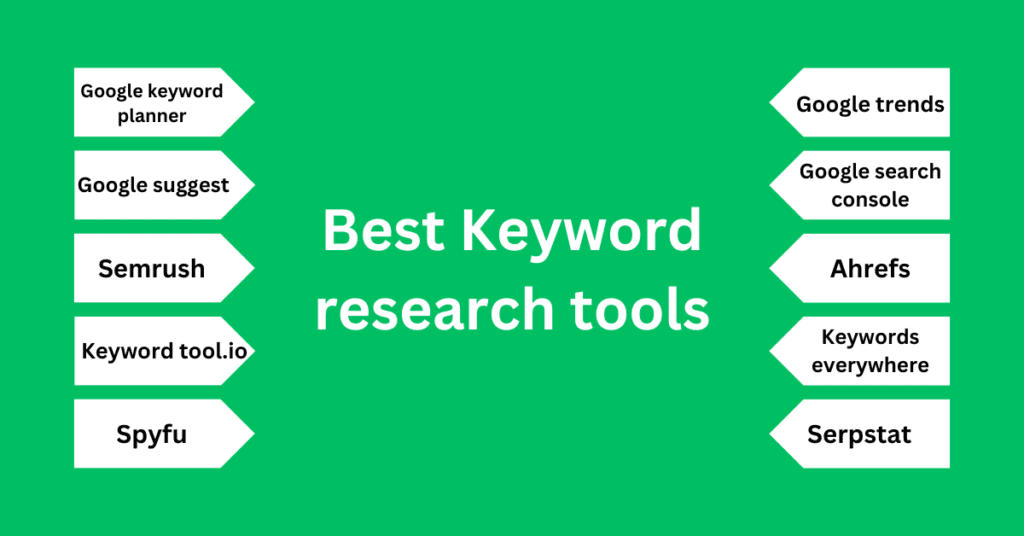
- You can use keyword research tools to find keywords relevant to your niche. These tools also provide you with a list of daily SEO tasks.
The density of the primary keyword should be between 1% and 2%. That means a blog with 2000 words should have a primary keyword with a maximum of 40 words. Most bloggers get confused about the keyword density. I’ll make it clear to you. For a 2000-word blog, the total words of the primary keyword should be 40. If the focus keyword contains 3 words, such as “on-page SEO”, it should come 13 times in the blog and not 40 times. The same should be applied to secondary keywords.
Title Tag or Meta Title
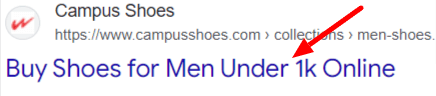
The title tag is one of the essential elements of an on-page SEO strategy. It is a clickable headline that appears in the search engine results whenever a user makes a query. Therefore, the meta title should be descriptive, attractive, engaging, and relevant to the content. You must include the primary keyword at the beginning of the meta title. The length of the meta title should be limited to 60 characters.
Meta Description
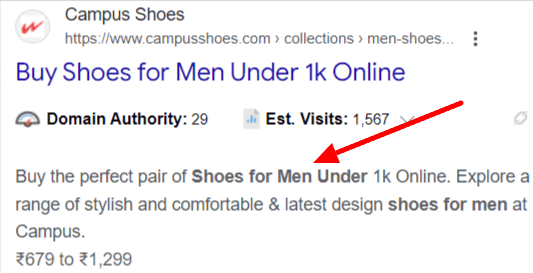
The meta description summarizes a specific web page’s content as an HTML attribute in search results below the meta title. For effective on-page SEO, the meta description should be written so that the user is encouraged to click on the web page. Include the primary keyword (on-page SEO in this case) naturally in the meta description. The ideal length of the meta description is 160 characters. The character length is necessary to maintain to make sure that the full description is displayed in search results without being cut off.
Header Tags (H1-H6)
By header tags, we mean headings and subheadings of the web page content. Headings are described as H1, H2, H3, up to H6. Use the H1 tag for the main heading with the primary keyword. Similarly, use H2 and H3 tags for the subheadings with secondary keywords. H4-H6 tags, though not that important, can be used for the rest of the content. Don’t forget to use seed keywords or their synonyms in H2 and H3 headings. Separating the content with header tags enables search engines to understand the content structure, which helps search engine rankings.
Images With Alt Tags
Images and videos are a vital part of the web page content. A blog is incomplete without images. They help break the text and make it more appealing, thus increasing user engagement and time spent on the website. However, the images must be SEO-optimized to improve search engine rankings. Use high-quality and low-file-size images in your blog. Using bigger file-size images can slow down the speed of your website.
The appropriate image file size should be between 100kb to 250 kb. Use alt tags for the images. An alt tag is the text used to define an image. Since search engines can’t read images, an alt tag helps search engines understand what an image is about. You can also use primary keywords in the alt tags. Videos are equally important for the blog.
Internal Links
Links that redirect a user to other pages within the same domain are called internal links. These links play a vital role in on-page SEO as they improve user experience and help search engines understand the structure of the website. Use internal links to your website to keep the user staying longer, decrease the bounce rate, and thus improve the ranking. A minimum of 3 internal links should be provided on a specific page; the more, the better.
The internal links encourage the user to explore more pages of your website. For example, if a user is reading a blog about on-page SEO and finds a link to keyword research tools, there is a possibility that the user will click on that link. The user will then be directed to another blog, thereby staying longer on your website and decreasing bounce rate.
Internal links also help crawlers discover and index new pages of the website. This improves the visibility of the deeper pages, like blogs or service pages.
Additionally, these links also impact the crawl budget of the website. They guide the bots in navigating the website pages and increasing the crawl budget. The crawl budget is the maximum amount of data fetched by the Google bots by crawling a certain number of pages in a single visit to the website. So, by interlinking important pages of the website, we can increase our crawl budget.
In short, internal linking is a vital part of on-page SEO as it increases user engagement, reduces bounce rate, and maximizes your crawl budget. All of these lead to a higher ranking in search results.
External Links
The hyperlinks that redirect the user and the bots to other domains are called external or outbound links. External links are essential components of an on-page SEO strategy. The usual practice is to use external links to reputable sites with high Domain authority. That increases your site’s credibility and enhances user experience and search engine ranking. External links help to develop a strategy to acquire quality links from popular sites, thus increasing your site’s authority.
External links add value to your content by directing to related content that supports your claims. For example, if you are writing a blog on Google’s ranking factors, linking to Google’s official documentation page will increase the trustworthiness of your article. If the users find helpful and relevant references, they will view your website as a reliable source of information.
External links also act as a trust signal to search engines. When your site redirects to a high domain authority (DA) site, that indicates your content is well-researched. This practice improves your site’s credibility. External linking strengthens your on-page SEO by building trust and signaling authority to search engines.
Linking to external sources also plays a vital role in link-building strategy. When you link your site to high authority sites within your niche, you build a relationship with the site owners. This can lead to an opportunity for backlinks, a very crucial strategy for SEO ranking factors. Quality backlinks from high authority sites improve your website’s authority and visibility in search results.
Best practices when using external links are:
- Link only to trustworthy high domain authority sites within your niche.
- Avoid low-quality and spammy sites.
- Use the anchor text naturally.
- Always set your external links to “open in a new tab” so the users will not completely leave your website.
- Keep the number of external links appropriate. Too many links can distract the user from your site (2-3 are enough).
When used strategically, external links build your site’s reputation and authority in search engines.
Readability
Content readability has a direct impact on-page SEO. If the content is difficult to read, complicated, or poorly structured, the visitor will quickly leave your site, resulting in a higher bounce rate and lower engagement. If, on the other hand, your content is well structured, clear, and easy to read, the user will stay for a longer time, engage more, and is likely to take the desired action. This will show Google that your page has valuable content.
To improve readability, write the content in such a way that your target audience can easily digest it. Use conversational language instead of technical. Using complex sentences can confuse the readers, so keep them short and precise. Break the content into small paragraphs (3- 5 lines). The content written at an 8th-9th grade reading level is most preferred by the readers. Google also prefers content with a high readability score. That means the readability score is also a vital part of on-page SEO.
Use transition words like “however”, “therefore”, “in addition”, and “for example”, etc. This will make your content flow smoothly and guide readers from one idea to the next. SEO tools like Yoast SEO specially recommend transition words for better readability. Use of passive voice is also recommended, although active voice is generally more engaging. There should be a balance between the two. The idea is to avoid overuse of both.
Plagiarism Free Content
Plagiarism is the malpractice of copying content (read our blog on content writing tips for beginners for more details) from other sources and presenting it as yours. It can be text, image, or any other form. Plagiarism is a direct violation of Google’s parameters. Google has developed several powerful algorithms that can easily detect plagiarized content.
Plagiarism in any form will lead to serious negative consequences. Your website may be penalized and de-ranked if it has copied content. Also, you may face legal action from the original content creator. You can damage your reputation and lose traffic and, subsequently, revenue. For effective on-page SEO, it is therefore, advisable to keep the blog content plagiarism-free. There is a set limit for plagiarism (20% maximum). You can use the tools to check your content for plagiarism.
URL Optimization
URL (Uniform Resource Locator) or the slug is the address of your website pages on the internet. It is also an important SEO ranking factor. You’ll need to organize URLs so that site visitors know what a page is about. Usually, focus keywords are used in the URLs. Clean, organized, and SEO-optimized URLs with target keywords increase the SEO score of a website and rank well in SERP’s. Also, specify the category of the page or post in the URL. See the example below.
www.yoursite.com/category/post name.
www.yoursite.com/page name.
Best Practices for Optimized URLs
1. Use Focus Keywords
- Always include the focus or primary keyword in the URL. That increases the relevance of a website’s page or post and also improves its ranking in Google’s search engine result pages.
Example:
 www.yoursite.com/on-page-seo-tips (clear and seo optimized)
☒www.yoursite.com/page 123?id=456 (unclear and non optimized)
2. URL Should Be Simple and Clear
- Avoid numbers and special characters so that the URL is easily readable, memorable, and shareable.
Example:
www.yoursite.com/blog/content-optimization
☒www.yoursite.com/blog/2025/09/16/?p=123
3. Show Hierarchy with Categories
- Add a category or subfolder in the URL so that your content looks organized.
- It shows relevance and also improves user experience.
Example:
www.yoursite.com/blog/seo/on-page-seo-guide
4. Use Hyphens Instead of Scores
- Hyphens (-) are treated as separators while underscores (_) are considered as word joiners by Google.
Example:
www.yoursite.com/what-is-google-ads
☒www.yoursite.com/what_is_google_ads
5. Keep URLs Short But Descriptive
- Long URLs with too many words look spammy, which can discourage clicks.
- Limit to 3-6 words that summarize your website page/post.
6. Avoid Stop Words Where Possible
- Words like and, of, the, ” and ” in, can be omitted. However, the URL’s meaning should not change.
Example:
www.yoursite.com/seo-url-structure
☒www.yoursite.com/the-basics-of-seo-url-structure
7. Additional Tips
- Avoid dynamic parameters (symbols like ?, =, &, etc.).
- A URL is case sensitive. Always use lower-case letters.
- Avoid keyword stuffing, ie, do not repeat the same keywords multiple times.
- There should be consistency between the URL, the meta title, and the meta description.
Social Share
After optimizing a web page or post with the above parameters, the next important task is to share the content over social media. Most users spend significant time on social platforms like Facebook, Instagram, Twitter, etc. Sharing the content on these platforms can improve your website’s rankings.
Content sharing on social media acts as a bridge between SEO and audience engagement. Easily shareable content gains visibility very quickly. It drives instant traffic and also provides opportunities for backlinks and long-term online visibility. You should also add sharing buttons to your blogs to increase reach. All of these contribute to improving website ranking.
Tools for On-Page Optimization
Some of the useful tools are:
- Yoast SEO/Rank Math (WordPress plugins)– For on-page SEO suggestions.
- SemRush/Ahrefs– For keyword research and competitor analysis.
- Google Search Console– For indexing and performance monitoring.
- Grammarly/Hemingway– For content writing without mistakes.
- Gtmetrix/Page Speed Insights– For monitoring and optimization of website speed.
Common Mistakes in On-Page Optimization
- Keyword stuffing.
- Ignoring mobile optimization.
- Missing internal and external links.
- Ignoring user intent.
- Poor site speed.
- Using duplicate content.
Latest Trends in On-Page Optimization
- Voice Search Optimization– Use conversational keywords and FAQs.
- Core Web Vitals– Focus on speed, interactivity, and stability.
- AI and Semantic SEO– Always optimize your content for user intent, not just for keywords.
- Video SEO– Embedding videos in the blog increases stay time on your website.
On-Page Optimization Checklist
- Add focus keyword in title, description, and in the first 10% of the first paragraph.
- Write 1500+ words of high-quality content.
- Mind H1-H6 tags. Use H1 for the main heading and H2/H3 for subheadings.
- Add 3-5 internal links and 2-3 external links to your blog.
- Optimize images (100-250kb) with alt tags (focus keyword in alt tag).
- Ensure fast loading and mobile-friendly design.
- Include social sharing buttons.
Conclusion
On-page SEO plays a vital role in the growth of any business. It is not a one-time task, but an ongoing process. By consistently improving your content quality, website structure, and technical setup, you can build your website that users love. You can significantly enhance your website’s exposure and credibility.