
With thousands of websites being added to the internet every day, businesses face intense competition in gaining visibility. If you’re aiming for more leads, higher traffic, and stronger sales, it’s essential to understand “what is Google Ads” and why it plays a critical role in digital marketing success. It also helps to clarify “what does ads mean” in this context — these are paid placements used to promote products or services online.
Additionally, knowing “what does sponsored mean on Google Search” is important, as sponsored results are labeled paid listings that appear prominently on the search engine results page, giving businesses a strategic advantage.
To fully understand “what is Google Ads” and how Google Ads works, it’s important to recognize its core purpose—helping businesses connect with their ideal audience. Google Ads is a paid advertising service offered by Google that allows companies to drive quality and relevant traffic to their websites.
For those learning “what is Google Ads and how to use Google Ads, it becomes clear that the platform is a simple yet powerful way to reach potential customers. Users who are actively looking for products or services similar to yours will see your advertising if you target them with particular search terms.
To make the most of this platform, it helps to understand “what does an advertiser do”—they create, manage, and optimize ad campaigns to ensure maximum visibility, improved engagement, and precise audience targeting at the right time.
By exploring the different types of Google Ads campaigns, advertisers can choose the right format to match their business goals. This type of precise targeting helps companies gain the most exposure, get people to interact with them, and reach the right people at the right time.
What is Google Ads?
Simply put, Google Ads, also known as PPC (pay-per-click), is an online advertising platform developed by Google that helps businesses reach their target audience through paid advertisements. Businesses use this platform to increase the visibility of their website or a specific landing page on Google’s search engine results page (SERP).
Once an ad is created, it is displayed to a specific audience based on selected keywords, location, demographics, and other factors. When potential customers search for products or services related to your business, your ad appears prominently on Google’s SERP, increasing the chances of clicks and conversions. I think now you must be clear about “what is Google Ads” and how it helps businesses reach the right audience at the right time.
Google Ads is a powerful tool not only for driving traffic but also for building brand awareness and achieving measurable marketing goals. Whether you’re a small business or a large enterprise, understanding “what is Google Ads” and how to use Google Ads can give you a competitive edge in the digital marketplace. In this way, you may maximize your return on investment, expand your consumer base, and boost sales.
Google also helps analyze the campaign and the performance of the Ad so that it reaches specified customers. Understanding “what is Google Ads” allows you to make the most of its features, such as remarketing in Google Ads, and additionally, you have full control over the ad budget. You can run the campaign as long as you want, and can stop or pause it anytime.
Why Advertise Only on Google?
Google is the largest and most widely used search engine, processing more than 5 billion queries daily.. People worldwide use this resource to search for products or services related to their queries. If you want to make more sales, you have to add your business to Google.
To take full advantage and maximize the reach of your business, it’s important to understand “what is Google Ads” and how it can help your business appear in front of potential customers.
The majority of companies hire a Google Ads specialist to run Google Ads campaigns to showcase their products or services to the relevant audience. Understanding “what is Google Ads” is essential before investing in it, as it plays a crucial role in maintaining visibility in a highly competitive market.
Even if your website ranks organically for a specific search term, your results can still be pushed down by paid ads from competitors. That’s why a Google Ads expert or a Google Ads agency will always recommend using PPC ads to ensure consistent traffic, brand exposure, and higher sales. Understanding “what is Google Ads” is essential before getting started, as a properly set up Google Ads account is required to run effective campaigns.
Google Ads vs SEO
When it comes to online visibility, businesses often compare Google Ads vs SEO or even Google Ads vs organic traffic. Google Ads delivers instant results by placing your website at the top of search engine results through paid campaigns, making it ideal for generating quick traffic and leads. SEO, on the other hand, focuses on building long-term organic rankings by optimizing your website and content.
While SEO requires time and consistency, it can provide sustainable traffic without ongoing ad spend. Understanding “what is Google Ads” helps you realize that the best approach involves a well-balanced combination of SEO for long-term success and Google Ads for immediate reach.
Benefits of Google Ads
To understand why businesses use this platform to increase brand awareness and achieve high sales, it’s important to know “what is Google Ads” and how it works. Google Ads was designed to help businesses succeed online by giving them powerful tools for targeted ads and results that can be tracked. Let’s explore a few key benefits and uncover the reasons why a Google Ads consultant strongly recommends it for companies aiming to grow online.
- low cost and high ROI
- Much faster results
- Increasing brand awareness
- Retargeting the existing audience
- Remarketing of the products
- Full control of the ads
- Optimization and conversion tracking
- Upper hand over the SEO or organic search
- Good hands-on analytics
There are different types of Google ads. A few of them to name are:
Types of Google Ads
To understand “what is Google Ads”, it’s important to know that Google offers online advertising services across multiple platforms, such as Google Search, Google Maps, Google Discovery, YouTube, Google Shopping, and Gmail. These platforms are part of the broader Google Ads ecosystem, giving businesses the flexibility to choose where their ads appear based on their target audience and content strategy.
Depending on the type of content you want to promote—be it video, text, or product listings—you can select the platforms best suited to your advertising goals. Below are the different ad types most commonly used by businesses.
- Search ads
- Display ads
- Shopping ads
- YouTube ads
Search Ads
When exploring “what is Google Ads”, it’s important to begin with the most common and widely used format, such as Search Ads. This type of ad is used by businesses to showcase their products or services directly on Google’s search engine results page (SERP) to relevant traffic.
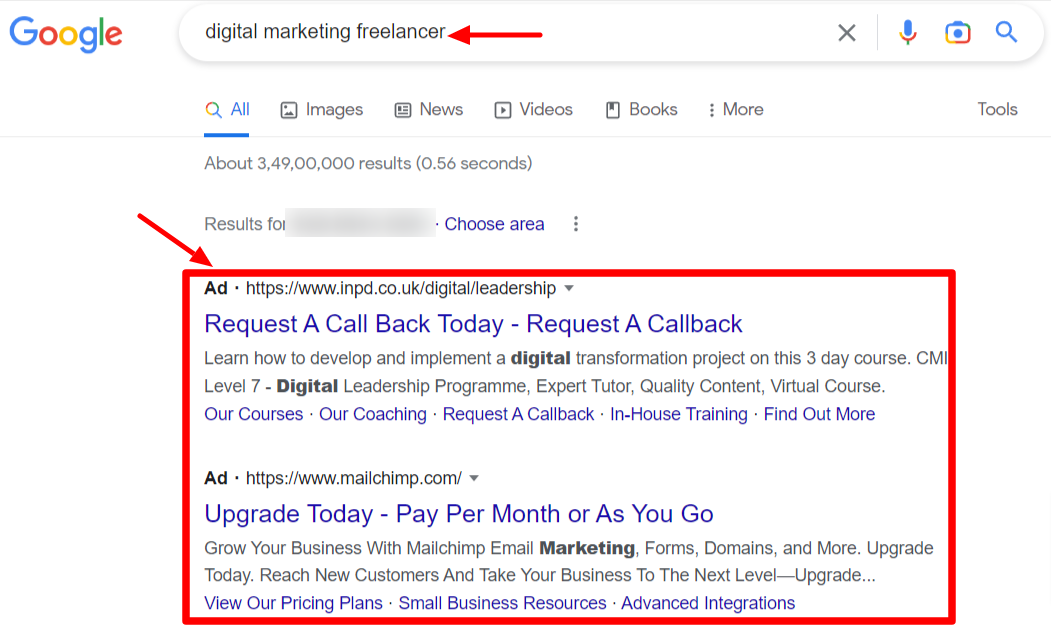
The primary goal of search ads is to secure the highest possible position in the search results by aligning with the user’s search intent. These ads are text-based and appear above or below organic results, making them highly visible to potential customers. See below for an example of how search ads appear in real-time search results.
Display Ads
Display advertising is another effective form of Google Ad that appears on Google’s SERP and across the Google Display Network. It is an important component when learning “what is Google Ads” and how it helps businesses reach wider audiences.
Visual in nature, display advertisements can take many forms, including text, photos, videos, and interactive media. These ads are designed to attract attention and build brand visibility beyond search results.
Understanding “how Google Display Ads grow marketing results for advertisers” is key to leveraging its potential — by targeting the right audience with compelling visuals, businesses can significantly increase brand recognition and drive engagement.
They can be targeted in two key ways: audience targeting, which shows ads to specific groups based on interests or demographics, and retargeting, which focuses on users who have previously interacted with your website or app. This method is especially effective for increasing conversion rates. Below is an example to help illustrate how display ads work in practice.

Shopping Ads
Google Shopping Ads are a unique and powerful part of the Google advertising ecosystem and are essential to understand when exploring “what is Google Ads”. These advertisements can be found on Google’s Shopping tab in addition to its main search engine results page (SERP).
Unlike traditional search ads, shopping ads, as opposed to traditional search ads, place more emphasis on product information and less on keywords. It’s also important to know when to pay for a shopping ad—typically, advertisers are charged when someone clicks on the ad, making it a cost-effective way to showcase products to high-intent buyers.

Youtube Ads
YouTube Ads are a powerful part of Google’s advertising network. Businesses can reach their audiences through engaging video content. By understanding “what is Google Ads”, you can see how YouTube Ads fit seamlessly into its ecosystem. This enables advertisers to target viewers based on interests, demographics, and search behavior.
YouTube ads can be text, short videos, or display ads. They appear before, during, or sometimes at the end of the video. Google Ads YouTube campaign is like a display ad campaign. A YouTube video campaign is very effective in attracting new customers to a business.
To make the most of video-based marketing, it’s important to understand “what is Google Ads” and how it extends beyond just search engine listings. Google Ads includes powerful video advertising features that allow businesses to run targeted campaigns on YouTube.
These ads can be customized based on user interests, demographics, and viewing behavior—ensuring your message reaches the right audience at the right time. With the right strategy, YouTube ads under the Google Ads platform can significantly boost brand awareness and customer engagement.

How Google Ads Appear on SERP
To truly understand “what is Google Ads”, it’s important to know that it operates primarily based on keywords—terms and phrases people use while searching for specific products or services on Google. Google Ads campaigns are designed to match these keywords with relevant ads, placing your product or service in front of the right audience at the right time.
However, simply running ads does not always guarantee desired results. There can be several reasons for underperforming ads, such as poor keyword targeting, low-quality ad copy, weak landing pages, or a mismatch between audience intent and ad messaging.
Fortunately, by applying a few proven strategies—such as refining keyword selection, optimizing Quality Score, utilizing A/B testing, and enhancing the relevance of landing pages—you can significantly improve ad performance and return on investment.
Understanding “what is Google Ads” and how it functions is essential for building campaigns that deliver results. A well-structured campaign backed by strategic planning can make a major difference in achieving consistent and cost-effective results.
Google Ads Best Tactics
Avoid Irrelevant Ads
It is of no use to spend on ads that are not relevant according to the user’s intent. You won’t get enough clicks on those ads. Your ad copy should match exactly the keywords on which you have made a bid. Understanding “what is Google Ads” helps ensure your ad copy aligns perfectly with the keywords you have bid on. Analyze the pain point of the searcher and design your ad copy accordingly. You can use Google’s responsive ad feature to run a successful ad campaign.
To fully utilize such features, it’s important to understand “what is Google Ads” and how its system matches ad relevance with user intent. Crafting compelling, keyword-aligned ad copy not only improves your quality score but also increases the chances of conversion. Regularly testing and optimizing headlines and descriptions can help in delivering more personalized and effective messaging to your target audience.
Do Not Use Broad-Match Keywords
These keywords do not generate many clicks as they are very diversified. Google can not specify the audience in this case and places ads to the wrong audience, hence getting fewer clicks. Knowing “what is Google Ads” helps you understand why Google might show your ads to an irrelevant audience in such cases, leading to lower engagement. Review the write keyword strategy before running an ad. Search Google to learn about broader match keywords.
Landing Page Optimization
Landing page optimization is crucial for converting visitors into customers. It ensures your page is clear, engaging, and aligned with your ad’s intent. Your landing page should be well-optimized according to your ad campaign. Check whether the page can solve the user’s problem when they click on the ad and reach the landing page.
Understanding “what is Google Ads” helps you see the importance of matching your landing page content with your ad campaigns, including relevant headlines, compelling calls-to-action, and fast-loading pages.
Quality Score (QS)
When learning “what is Google Ads”, understanding the concept of quality score can be beneficial. The higher your quality score, the greater the chances of your ad receiving better placements and higher click-through rates (CTR). Quality Score is a key factor that influences your ad rank on Google’s SERP, directly impacting the visibility and cost-effectiveness of your campaigns.
Google regularly provides insights into your campaign’s quality score, which is calculated based on several important factors. These consist of the relevance of your Ad copy to the search query, the landing page’s design and user experience, and your account’s past success.
A well-optimized campaign with a strong quality score not only ranks higher but often pays less per click. By continuously monitoring this score and making necessary improvements, you can significantly boost your ad performance and ROI over time.
Web Analytics vs Google Ads
To truly benefit from Google’s advertising platform, it’s important to understand “what is Google Ads” and how integrating it with Google Analytics can enhance tracking, optimization, and overall campaign performance. Google Analytics plays a vital role in improving your Google Ads performance by offering deep insights into user behavior and campaign effectiveness. It helps advertisers monitor essential behavioral metrics such as bounce rate, average session duration, and conversion rate—all of which contribute to smarter Google Ads optimization.
For example, it reveals the specific keywords users search before clicking on your ad or visiting your website. This keyword tracking capability allows you to identify high-performing terms and eliminate low-converting ones, making your ad budget more efficient.
To use this data effectively, it’s important to understand “what is Google Ads” and how it integrates with Google Analytics to optimize campaign performance. Additionally, Google Analytics gathers comprehensive information from your website and produces useful reports that help you develop a well-informed campaign approach.
With these insights, you can refine your targeting, reach potential customers more effectively, and ultimately increase your conversions and sales. By connecting Google Analytics to your account, you can analyze the results from the ads and optimize your campaign.
Conversion Tracking in Google Ads
Conversion tracking is a free tool that provides you with information about how a user is interacting with your advertisement. It tells what action a particular user has performed, whether the user has purchased a product, signed up for the newsletter, downloaded an app or PDF, or called your business. Any of the above actions performed by the user is a conversion.
Conversion tracking can be used to collect data regarding conversions for your campaigns, keywords, and ad groups. Using that data can help you to understand how your ad campaign helps to achieve the goal of improving your business. It’s also important to know “why does Google Ads not work immediately, because it often takes time to gather enough data, optimize your targeting, and allow the system to learn what works best for your goals.
SEO and Content Optimization
To fully understand “what is Google Ads” and how to maximize its potential, it’s important to combine it with strong SEO practices and content optimization. When used together, these strategies can significantly improve your ad performance, drive more qualified traffic, and enhance overall visibility in both paid and organic search results. A few benefits may be as follows:
- To find new keywords, you might utilize a keyword planner.
- Discover new search terms and keywords associated with a specific keyword.
- Optimization of the website to address problems such as website speed and many others.
- Specifying the targeted audience for better optimization.
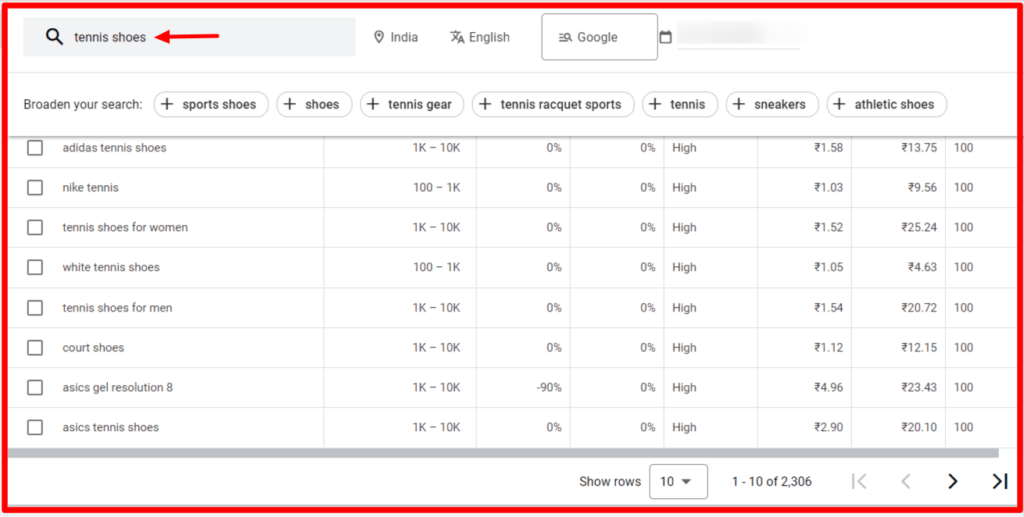
To truly understand “what is Google Ads”, one must recognize its value beyond just paid promotions. Without Google Ads, identifying specific and high-converting long-tail keywords becomes extremely challenging, especially considering their vast variety. These keywords are crucial for attracting qualified traffic and focusing on specific niche segments. Google Ads provides accurate data that helps marketers discover the most profitable long-tail keywords, which can then be used to build a content idea sheet for a well-planned content marketing strategy.
Once identified, these keywords can be further used in SEO and content optimization efforts to improve organic rankings. Additionally, Google Ads allows you to track keyword performance in real time, giving you valuable insights into what’s working and what needs improvement. By combining Google Ads with SEO strategies, businesses can significantly enhance visibility, drive more targeted traffic, and ultimately increase their ROI through both paid and organic channels.
Scaling Profitability
You can easily find whether Google Ads are scalable or not by running a profitable campaign and analyzing its performance. Understanding “what is Google Ads” helps you recognize the key metrics that indicate success, such as click-through rates, conversion rates, and return on ad spend. If you can create a campaign that performs better than others, you should invest more in that campaign to scale the result, and you can easily get an idea of the scalability.
Conclusion
Building a successful and lucrative business in the current digital era requires having a strong Google presence. Understanding “what is Google Ads” is essential, as it serves as a powerful tool to help enterprises achieve this goal by enhancing their online visibility. Advertising is part of a broader digital marketing strategy, and Google Ads makes online advertising both effective and efficient, offering a diversified reach within a short timeframe. It empowers advertisers with the flexibility to take control of their campaigns, set their terms, and take strategic actions to meet their business objectives.