
In today’s AI era, a bigger question may be whether email marketing is dead or outdated. Email marketing remains popular and has become even more useful and relevant. In fact, it has become more powerful, especially for e-commerce brands.
In this article, we will discuss the “best email marketing platforms for small businesses. Because of high ad costs and strict privacy rules, online store owners need a channel on which they have complete control. Also, the organic reach on social media is reduced.
There should be an alternative available, and the best email marketing tools for e-commerce brands serve the purpose. If email marketing is done in a proper way by using email marketing software for online stores, store owners can increase repeat purchases and recover abandoned carts.
They can make long-term relationships with their customers. Email marketing also helps them generate good revenue. They need not depend on ads. So, choosing the “best email marketing platforms for small businesses is no longer optional but a growth decision.
Let’s discuss in detail the top email marketing platforms for online stores and walk you through:
- Why is the email platform ideal for e-commerce
- Comparison between the best email marketing platforms for small businesses
- Pros, cons, and price of each tool
- Which is the best platform for beginners, growing brands, and big stores
If you are a blogger, freelancer, entrepreneur, or e-commerce business owner, you will find this article helpful and make the right decision. You will learn how to choose email marketing software for e-commerce.
Why Email Marketing Service is Ideal for Online Stores.
Every email tool is not built for eCommerce. Different online stores have their specific needs. The best email marketing platforms for small businesses must have the following core features:
1. Deep Ecommerce Integrations
A good email platform should have integration with:
- Shopify
- Woocommerce
- Bigcommerce
- Magento
- Custom stores
The integration of the email platform with the e-commerce stores is useful for customers, their purchase behaviour, products, and orders.
2. Advanced Automation
The email platforms must have automation features like:
- Abandoned cart emails
- Browse abandonment emails
- Post-purchase follow-ups
- Win-back campaigns
- Cross-sell and upsell sequences
3. Segmentation and Personalization
While doing email marketing, it is not good to send the same email every time to the user. We must segregate the user behaviour and design the email structure accordingly.
Email marketing tools allow us to segment based on:
- Purchase history of the user
- Location of the user
- Average order value placed by a specific user
- Engagement level
- Product categories viewed
4. Deliverability and Reliability
Nobody bothers about the spam folder of the email. Therefore, emails sent should not land in the spam folders.
A good email platform has:
- Ip reputation
- Authenticity (SPF, DKIM, DMARC)
- Optimization of the email so that it always lands in the inbox.
5. Analytics and Revenue Tracking
Tracking of every email is checked by these tools. This lets you know:
- Revenue collected per email
- Conversion rates
- Click-through rates
- Customer life time value
Best Email Marketing Platforms for Small Businesses (Quick Overview)
Below is a comparison of different email marketing platforms for small online businesses:
|
Platform |
Best For |
Starting Price |
|
Scaling ecommerce brands |
Free (limited) |
|
|
E-commerce automation |
Free |
|
|
Beginners & small stores |
Free |
|
|
Advanced segmentation |
$39/month |
|
|
CRM + email |
$29/month |
|
|
Brevo (Sendinblue) |
Budget-conscious stores |
Free |
|
Creator-led stores |
Free |
|
|
Large businesses |
Free (paid CRM) |
|
|
Funnels + ecommerce |
$19/month |
|
|
Design-focused brands |
$11/month |
1. Klaviyo – Best Overall for Ecommerce Growth
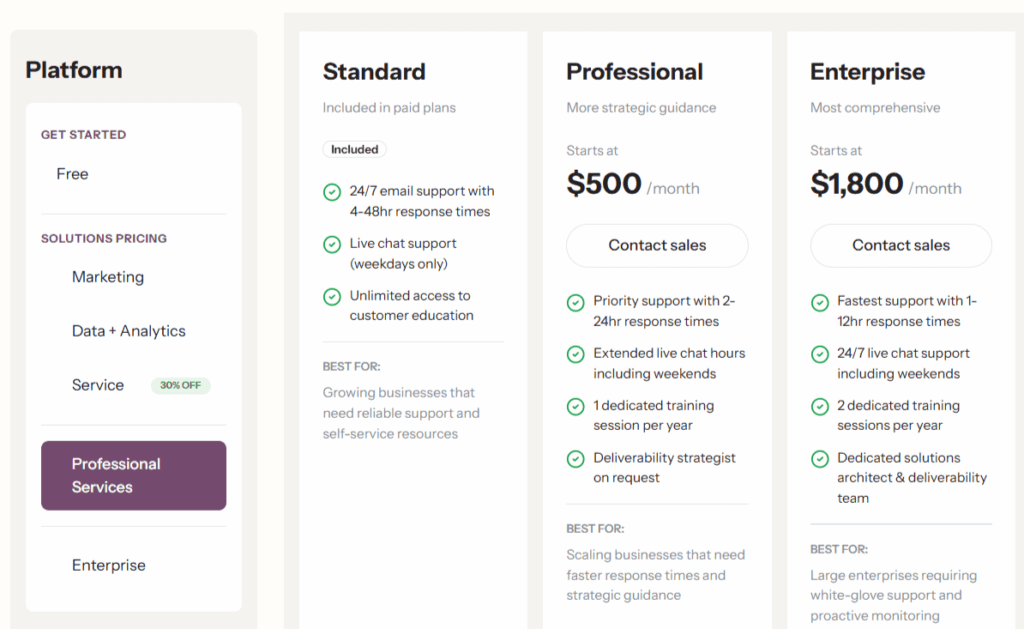
If you are serious about scaling your brand, Klaviyo is among the “best email marketing platforms for small businesses“. This tool is specially built for e-commerce. Customer data, behaviour, and messaging are connected in one place with the help of this tool.
Key Features:
- This tool easily integrates with Shopify and WooCommerce
- Has advanced behavioral tracking
- Offers predictive analytics
- AI-powered product recommendations
- Both sms and email are in one platform
Pros:
- Has a powerful automation
- Segmentation options are excellent
- Detailed revenue attribution
Cons:
- Pricing goes up with the email list
- Not for beginners
Klaviyo is best suited for mid-sized to large e-commerce stores. Brands doing frequent promotions and the stores that focus on repeat purchases find this tool useful. Thus, this tool is in the list of the “best email marketing platforms for small businesses” for serious e-commerce brands.
Pricing:
- Free plans are available
- Paid plans start from $45 per month
2. Omnisend – Best for Omnichannel E-commerce Marketing
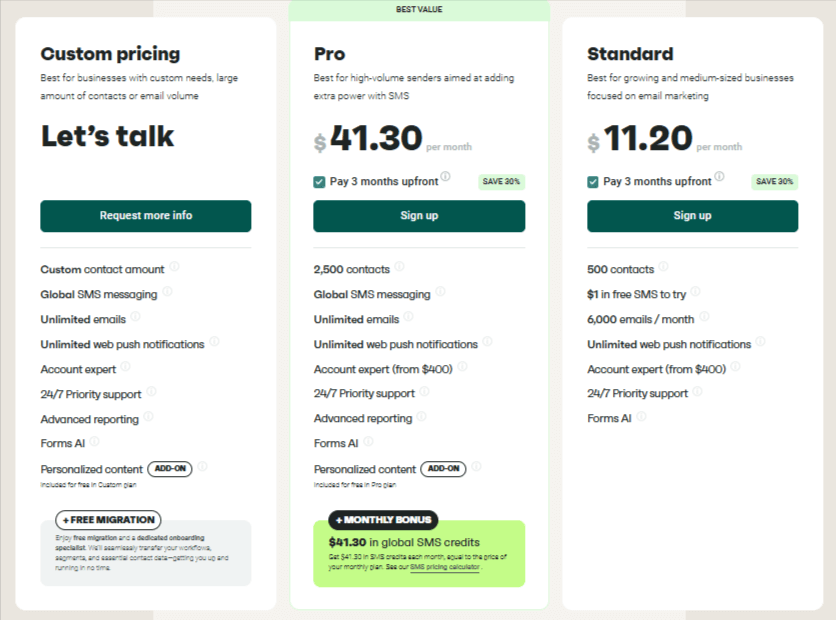
Omnisend is designed in a way that it has email, SMS, and push notifications under one roof. That’s why it is a perfect tool for e-commerce marketing companies.
Key Features:
- It has a pre-built automation workflow for e-commerce
- SMS, email, and web push campaigns
- Can sync seamlessly with Shopify and WooCommerce
- Product picker and dynamic discounts
Pros:
- Omnisend has easy-to-use features
- It has strong automation templates
- Offers free plans
Cons:
- CRM has limited features
- Advanced reporting is available only on higher plans
Pricing: $16 per month
Omnisend is good for small and mid-sized stores. It is one of the most user-friendly “best email marketing platforms for small businesses“. Brands that run campaigns and ecommerce stores, and have small technical teams and low budgets, can get paid plans with Omnisend.
3. Mailchimp – Best for Beginners and Small Online Stores
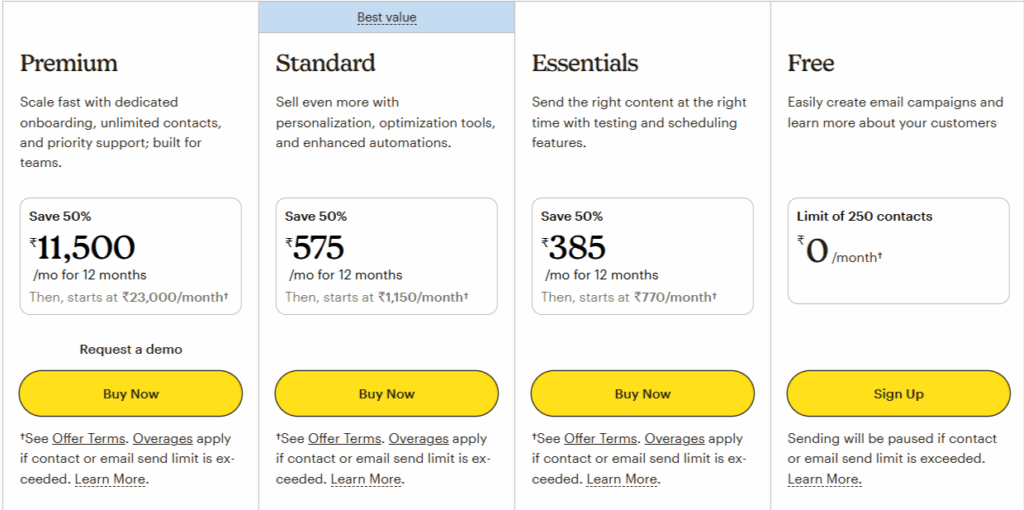
Mailchimp is a recognized brand and a very popular email marketing tool. This tool is simple and has an easy-to-use interface.
Key Features:
- Mailchimp has drag-and-drop email builder
- Automation is basic and simple to understand
- It has pre-designed templates for drip campaigns
- E-commerce integrations available
Pros:
- As explained above, Mailchimp has a simple and easy-to-use interface
- It has a large library of templates
- Free plan is available to a limited extent
Cons:
- Mailchimp has limited e-commerce automations
- Price goes up as email list grows
Pricing: $13 per month
Mailchimp is not much advanced email builder. Still, it is rated among the “best email marketing platforms for small businesses“ for beginners. It is useful for new e-commerce store owners, bloggers, and digital product sellers who have a small catalog.
4. Drip – Best for Segmentation of e-Commerce Data
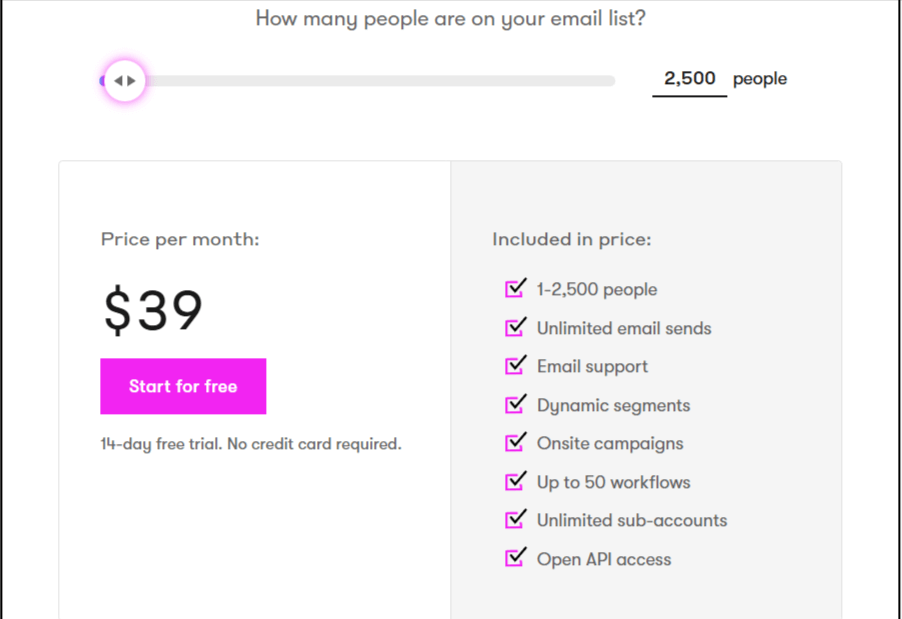
Drip is an advanced email marketing system. It is listed among the “best email marketing platforms for small businesses“ for beginners. It is designed for online retailers who wish to have more control over the client journey. It allows users to create detailed automation workflows on the basis of customer behavior, purchase history, and engagement.
Key features:
- Drip is a visual workflow builder
- It focuses strongly on segmentation and personalization
- It has an e-commerce-focused CRM
Pros:
- Drip helps users create professional emails without technical skills
- Free plan is helpful for small lists with a daily limit
- Good deliverability
- It has strong analytics
Cons:
- Only 14 days free trial plan available
- Requires a strategy to use its features
Pricing: $39 per month
Drip is best suited for Data-driven ecommerce brands. Drip is a powerful choice for businesses looking to scale their email marketing with data-driven strategies. However, it may take some time to learn
5. ActiveCampaign – Best for Email + CRM Combination
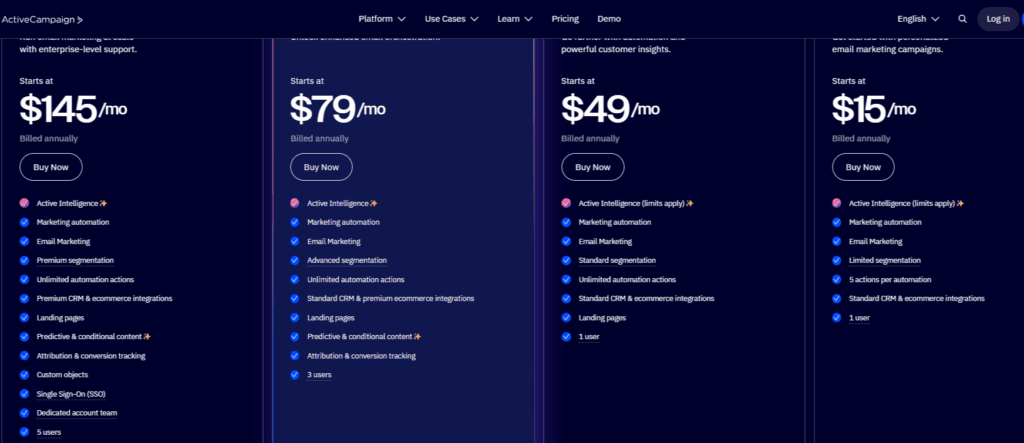
ActiveCampaign is a popular email marketing and automation platform. It is one of the “best email marketing platforms for small businesses“. This platform has a combination of email marketing, marketing automation, and CRM. It helps users create personalized email campaigns and automate follow-ups based on user behavior. You can also track customer interactions across multiple touchpoints.
Key features:
- ActiveCampaign has an Advanced automation
- It has built-in CRM
- powerful email personalization, detailed segmentation
- Other features include event tracking, A/B testing, and detailed reporting
Pros:
- It has flexible workflows
- CRM is very strong
- Customer support is excellent
Cons:
- Interface is complex
- Pricing seems high
Pricing: $29/month
ActiveCampaign is highly recommended for B2C and B2B hybrid stores. It helps create sales-driven funnels. The best feature of ActiveCampaign is the integration of email marketing, marketing automation, CRM, and customer experience tools. The tool is best for small and medium businesses. They can run targeted campaigns and improve engagement to convert leads into loyal customers.
6. Brevo (Sendinblue) – Best Budget-Friendly Option
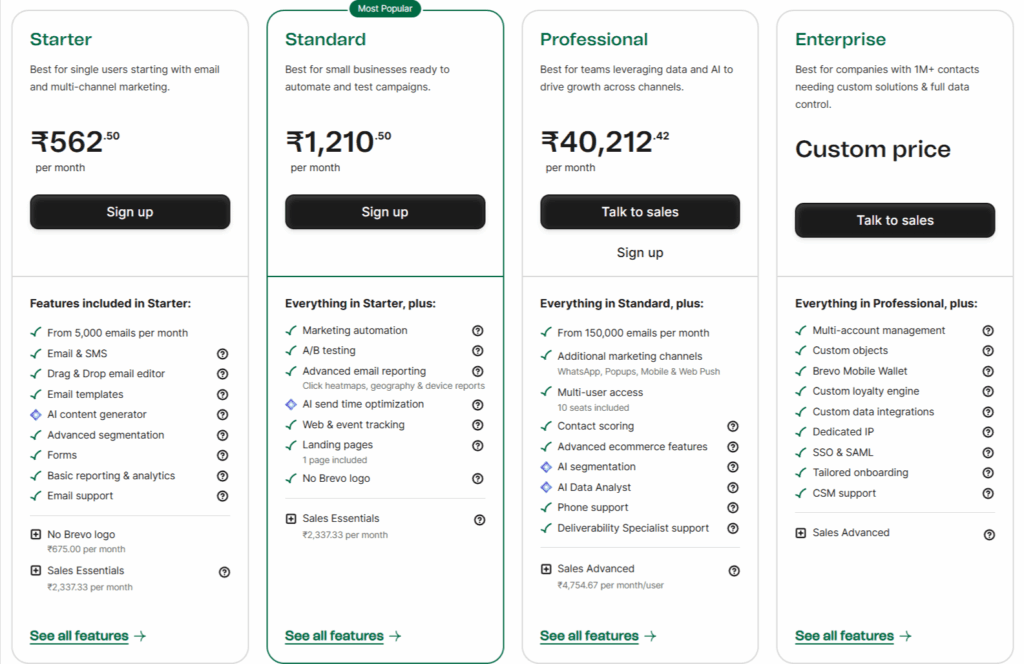
Founded in 2012, the Breve email marketing system was previously known as Sendinblue. It offers a budget-friendly option for stores looking for more features at a low cost. Brevo initially was only an email marketing platform. Later, it developed sales tools like email automation and marketing campaign tools.
Users can create, send, and track email campaigns with its drag and drop editor. With its marketing automation feature, businesses can set up sophisticated workflows that respond to customer behavior. Thus, they can send personalized messages at the right moments. Apart from email marketing,
Brevo also has features like SMS marketing, transactional email services, and a built-in CRM system. With live chat functionality and landing page builders, businesses can manage multiple communication channels from a single dashboard.
Key features:
- Brevo can be used for Email and SMS marketing
- You can create automation workflows
- It also offers e-commerce plugins for easy operation
Pros:
- Pricing is affordable
- It has free plans available. Of course, there is a daily limit.
- Deliverability is comparatively good
Cons:
- Brevo gives basic reporting with the free plan
- It has limited templates
Pricing: Paid plans start at $9/month.
Because of its low-priced paid plan, Brevo is among the “best email marketing platforms for small businesses” for startups.
7. ConvertKit (Now Kit)– Best for Creator-Led Online Stores
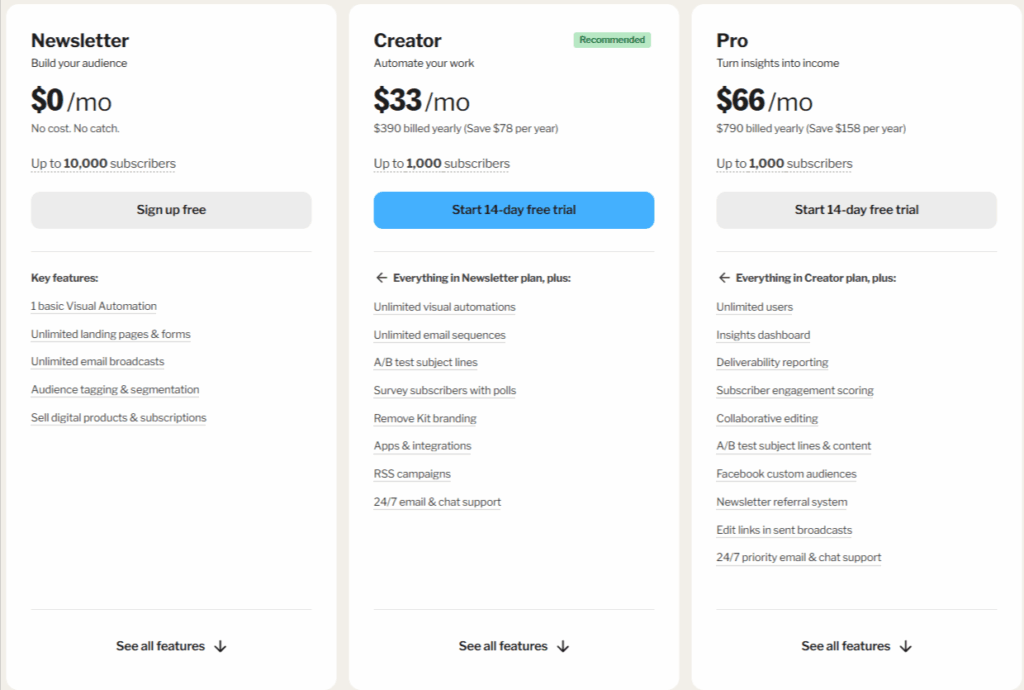
ConvertKit is an email marketing platform specifically designed for content creators, bloggers, podcasters, YouTubers, and online course creators. It has features like customizable sign-up forms, landing pages, and automated email sequences. This helps creators build direct relationships with audiences and nurture them.
Unlike other email marketing platforms that focus on promotional campaigns, ConvertKit focuses on subscriber engagement and content delivery. The platform uses a tag-based system instead of traditional contact lists. This helps creators to segment their audience based on interests. The creators can send targeted content to different segments.
Key features:
- The automation is quite simple
- It has built-in tools for selling digital products and managing paid newsletters
- Has features like embedding of sign-up forms and customizable email templates
- Easily integrates with WordPress, Teachable, Shopify, and Patreon
Pros:
- As said above, ConvertKit has a clean and simple interface
- ConvertKit operates on a subscriber-based pricing model
- free up to 10,000 subscribers (with limited features)
- ConvertKit offers visual automation builders that let creators design sophisticated email sequences
Cons:
- A major drawback of ConvertKit is its limited ecommerce tracking
- Not ideal for e-commerce stores with large catalogs
Pricing: plans start at $15/month
Because of its multiple sophisticated features, ConvertKit fits well in the list of “best email marketing platforms for small businesses“. It is a good option for creators who need reliable, powerful tools worth investing in as their audience grows.
8. HubSpot Email Marketing – Best for Large Businesses
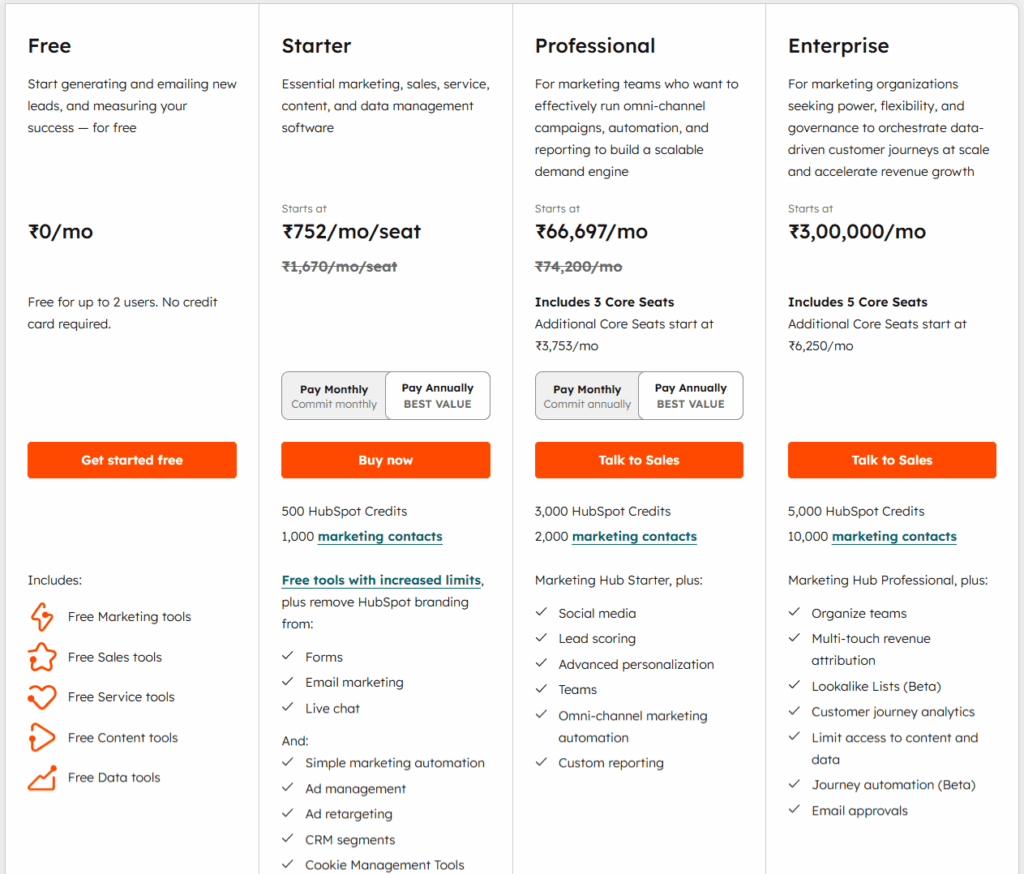
HubSpot was initially an email marketing services platform. Now it is a complete business growth platform. It is a leading customer relationship management (CRM) and an inbound marketing platform. HubSpot has changed the way businesses approach marketing, sales, and customer service.
HubSpot’s inbound marketing feature helps attract customers by offering useful content and positive experiences, rather than relying on ads. This tool integrates several hubs, including Marketing Hub, Sales Hub, Service Hub, CMS Hub, and Operations Hub. Businesses can manage their entire customer journey on a single platform, from website visit to long-term customer relationship.
Key features:
- HubSpot has a free CRM which allows small businesses and startups to access professional-grade tools at no cost
- It offers free certifications and training in inbound marketing, content marketing, and sales
- The platform has scalability; it can grow with businesses from the startup phase up to the enterprise level
- Has established itself as a thought leader through the HubSpot academy.
Pros:
- HubSpot is an all-in-one platform
- Reporting is excellent
- Highly scalable
Cons:
- Pricing goes up as business grows
- Expensive for small stores
HubSpot is popular among B2B companies and marketing agencies. This platform is helpful for organizations that want all their tools in one place and prefer making decisions based on data.
9. GetResponse – Best for Funnels and Webinars
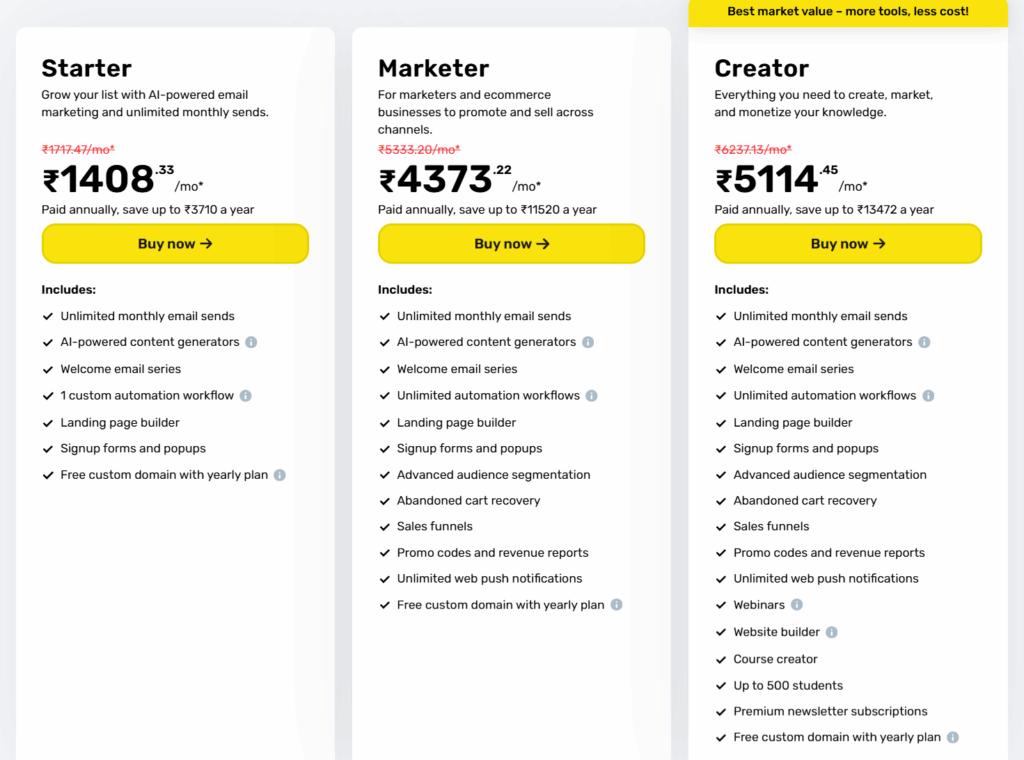
GetResponse is a versatile email marketing and marketing automation platform. It has been serving businesses since 1998. Apart from the email services platform, it also offers features for building email funnels.
Key features:
- Email automation
- Conversion funnels
- Webinar hosting
- E-commerce tools
Pros:
- GetResponse is a feature-packed email marketing platform with an all-in-one approach
- Automation is very perfect and smooth
- Pricing is affordable
Cons:
- Interface is outdated
- GetResponse has limited e-commerce features
Pricing: $19 per month
10. Campaign monitor
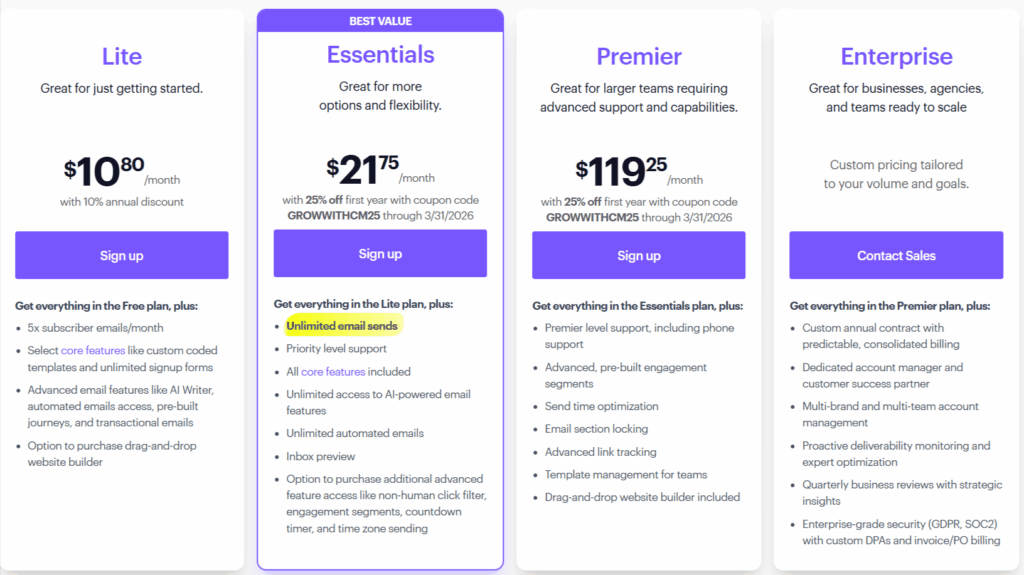
Campaign Monitor is an online email marketing platform for creating and sending marketing emails. It has a drag-and-drop editor and ready-made marketing templates for email design. This tool also provides analytics to track performance and manage subscriber lists.
Key features:
- Campaign Monitor provides professional email design templates
- A good feature is its drag-and-drop editor
- Also offers e-commerce integration
- Mobile optimized emails
Pros:
- Campaign setup is easy
- Easy connectivity with CRMs and web applications
Cons:
- This platform has an automation limit
- Basic pricing is low, but goes higher with the database
Pricing: $10 per month for the lite package
11. Zoho
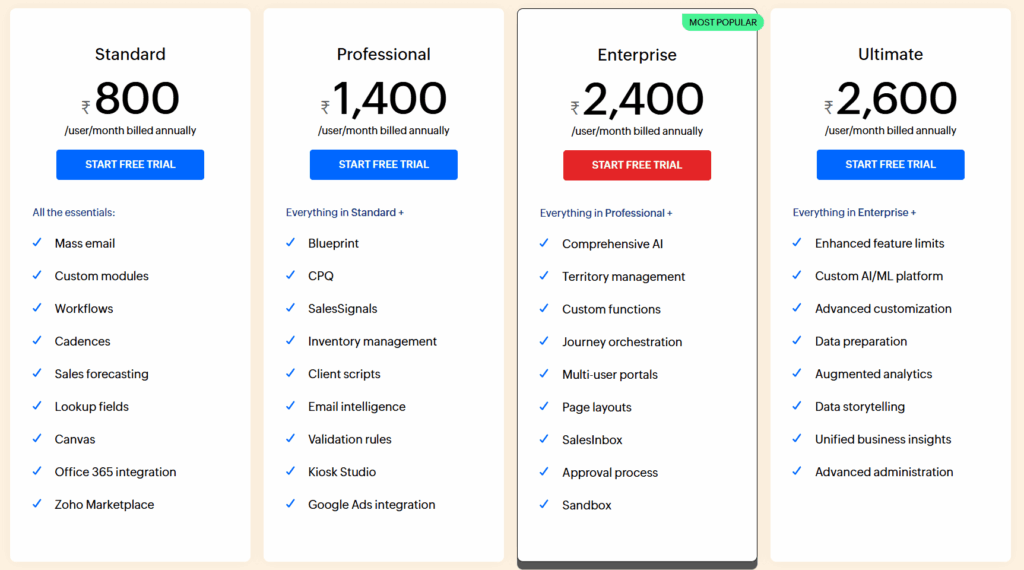
Zoho is a professional and highly reliable email marketing platform. It is used for running email campaigns. This tool has an impressive suite of services for marketers and business owners. Zoho provides well-designed templates and easy-to-use editors. The platform is budget-friendly and easy to navigate.
Key features:
- Secure and ad-free email hosting platform
- Zoho has an easy-to-navigate and well designed interface
- The editor is quick to use and includes all the essential elements, such as columns, videos, and polls
- It has a wide range of email and form templates
- Images from Unsplash can be directly uploaded to its editor
Pros:
- Advanced interface with AI-powered features
- The biggest advantage of Zoho is its smooth integration with other Zoho tools, such as Zoho CRM.
- It is affordable and easy-to-use platform for small businesses
- Zoho gives analytics to track opens and clicks
- Good deliverability
- It has useful features like drag-and-drop email templates, contact segmentation, and automation workflows
Cons:
- Zoho has limited advanced automation as compared to other high-end e-commerce tools
- No automations in the free plan
- Email editor can be restrictive sometimes
Pricing: $3-$5 per month for 500 contacts
Overall, Zoho is a simple but feature-rich modern email marketing CRM useful for small businesses and professionals.
How to Choose the Best Email Marketing Platforms for Small Businesses
Before deciding email marketing platform for your business, ask yourself
- How big is your store at present?
- Do you need automation?
- Is budget your concern?
- What kind of product do you plan to sell, physical or digital?
My Recommendations
- Mailchimp and Brevo: For beginners
- Klaviyo, Omnisend: For scaling stores
- Drip, ActiveCampaign: For advanced users
- ConvertKit: For creators
Email Campaigns You Must Run for Your Online Store
Whatever tool you use for email marketing, the following campaigns are essential for any business:
- A series of welcome campaigns
- Abandoned cart
- Post-purchase follow-up campaigns
- Product recommendations
- Re-engagement emails
The best email marketing platforms for small businesses should make these easy to implement.
Conclusion
Email marketing is one of the highest ROI channels for e-commerce in 2026. But success depends on selecting the right platform. The best email marketing platforms for small businesses are not just about sending emails. They help you understand customers, automate email journeys, and grow revenue.
Whether you are launching your first online store or scaling an established brand, investing in the right email marketing tool pays off for years. Try with free plans and explore their automation features. That way, you can decide the best platform for your business. If you do that, email can be one of your strongest growth engines in 2026.