You spent three weeks writing what you know is a great blog post. You hit publish. You wait. You refresh Google Search Console so many times that your browser starts autocompleting the URL for you.
Nothing. And then you go check Google yourself, and there it is. Some other website, with content that’s honestly not even that good, is sitting pretty at position three. You’re on page four. Zero clicks. Zero traffic. Zero anything.
So what gives?
Here’s the thing: they’re not outwriting you. They’re out-thinking you. They’re using something called SEO intelligence, and you’re still doing SEO the old-fashioned way, writing and hoping.
This isn’t about your writing being bad. It’s about having a smarter system. And once you get “what is SEO intelligence”, how it works, and how normal people like you can use it without a massive budget or a team of analysts, everything starts to make a lot more sense.
Let’s dig in.
So, What Is SEO Intelligence, Really?
Most people hear the phrase “what is SEO intelligence” and picture some intimidating enterprise dashboard full of graphs they’d need a data science degree to understand. Others think it’s just a fancier name for keyword research.
SEO intelligence is the process of collecting, analyzing, and actually using data-driven insights to make smarter calls about what content you create, how you optimize it, and how you get it in front of the right people. The end goal? Your site ranks higher, pulls in visitors who genuinely want what you offer, and turns those visitors into readers, leads, or customers.
Here’s how to think about it. Old-school SEO is reactive. You write something, see where it lands, maybe tweak a title tag, and call it a day. SEO intelligence is proactive. It tells you, before you write a single word, which topics people actually want, which competitors you can realistically beat, what your audience is really searching for, and what kind of content Google is currently rewarding for your topic.
It’s the difference between guessing and knowing. For bloggers, freelancers, and solopreneurs who don’t have time to waste on content that goes nowhere, that difference is massive.
The Core Pillars of SEO Intelligence (Without the Corporate-Speak)
SEO intelligence isn’t a single tool or a one-time thing you do before you hit publish. It’s a system with a few key layers that work together. When you understand what those layers are, it suddenly becomes obvious why some content crushes it while other content just disappears into the void.
Keyword Intelligence: Beyond Search Volume
You’ve likely dabbled in keyword research at some point. Maybe you typed something into Google’s Keyword Planner or played around with Ubersuggest. Cool. Keyword intelligence, however, involves much more than simply selecting a term with a respectable monthly search volume.
It digs into the real questions:
- What does the searcher truly want when they use this keyword? Are they seeking information, ready to make a purchase, or simply looking for a particular webpage?
- How difficult is it to rank for this keyword, and does your website currently stand a reasonable chance of achieving that?
- Are there rising keywords, terms that are gaining traction fast, that you could actually own before everyone else jumps on them?
- What related semantic keywords does Google want to see alongside your main term?
Say you want to write about “email marketing.” A surface-level approach gives you that keyword and its volume, and you call it done. However, asking “what is SEO intelligence” reveals the real picture: “email marketing for small business” has lower competition and clear intent, “best email marketing platforms” signals that someone’s ready to compare options and maybe buy, and “email marketing vs social media” is picking up steam among new entrepreneurs.
That’s not just data. That’s your content roadmap.
Competitive Intelligence: Legally Peeking at What’s Working for Everyone Else
Here’s something a lot of beginners don’t realize: your competitors have already done a huge chunk of your research for you.
SEO competitive intelligence means looking at which pages on competing sites are pulling in the most organic traffic, which keywords they rank for that you don’t, where their backlink profile is thin, and how they’ve structured their content to nail search intent.
When you understand what is SEO intelligence, you realize that tools like Ahrefs, Semrush, and Moz put all of this data right in front of you. You can pull up a competitor’s best-performing page and basically reverse-engineer why it works. The word count, the structure, whether it’s a listicle or a deep guide, the keywords in their headers, and the links pointing to it. All of it.
This is a total game-changer if you’re a freelancer or a small business owner who can’t afford to write 50 blog posts and hope that three of them happen to stick. You skip the guessing and go straight to writing the right things.
Search Intent Intelligence: The Part Google Actually Cares About Most
Google’s algorithm has changed a lot. A lot. It doesn’t just match your keyword to a page anymore. It tries to figure out why someone typed that query, and then it shows the result that best answers that why.
That’s search intent. And if your content doesn’t match what Google thinks the searcher actually wants, you’re not ranking. It doesn’t matter how well you’ve written it.
There are four types of search intent, and knowing the difference is genuinely one of the most useful SEO skills you’ll ever pick up:
| Intent Type | What the Person Actually Wants | Real Example |
|---|---|---|
| Informational | To learn or understand something | “what is seo intelligence” |
| Navigational | To find a specific site or page | “Ahrefs login” |
| Commercial | To research options before deciding | “best SEO tools 2025” |
| Transactional | To buy or sign up right now | “buy Semrush plan |
Write a long informational guide for a keyword with transactional intent, and you’ll wonder why you’re not ranking. Google’s already looked at what’s performing well for that query and decided what content type fits. Understanding what is SEO intelligence means you check those signals first, then build your content around them.
Content Intelligence: Writing Smarter, Not Just Longer
This is where SEO intelligence gets really practical.
Content intelligence means knowing which content formats work best for your topic, what questions your actual audience is typing into Google (not the ones you assume they’re asking), how long your post needs to be based on what’s ranking, which semantic concepts and related entities Google expects to see in a post about your subject, and how to set up your headers and internal links to send the right relevance signals.
Quick example.
If you’re writing about “how to start a freelance business,” content intelligence shows you that the top-ranking pages tend to be 2,500 to 3,500 words, use a step-by-step format, and consistently cover things like how to price your services, how to find your first client, and how to handle contracts. If your post skips those subtopics, Google reads your content as thin compared to everything else that’s ranking.
That’s the specific kind of insight that separates a page that climbs to page one from one that never leaves page four.
Technical SEO Intelligence: The Stuff Working Quietly in the Background
You can nail keyword strategy and write genuinely great content, but if your site has crawling issues, loads like it’s still on dial-up, has broken internal links, or falls apart on mobile, you’re fighting uphill.
Technical SEO intelligence means keeping an eye on your site’s overall health, tracking your Core Web Vitals, catching indexation errors before they quietly destroy your rankings, and understanding how your site architecture either helps or hurts how Google passes authority around your pages.
If you’re a beginner, I know this sounds scary. But you genuinely don’t need to be a developer to grasp what is SEO intelligence in a technical sense. Tools like Screaming Frog, Google Search Console, and PageSpeed Insights flag the biggest problems and explain them in plain language. The intelligence is knowing which issues to prioritize for a site like yours, not fixing every possible technical detail.
Why SEO Intelligence Hits Differently Right Now
Google processes something like 8.5 billion searches every single day. AI-generated content is flooding the web faster than anyone expected. Zero-click searches, where Google just answers the query right on the results page and the user never clicks anything, are increasing. And how people search is shifting, with voice queries, Google’s AI Overviews, and conversational questions becoming more common.
In that environment, “just write good content” isn’t a real strategy. It’s a wish.
When you truly grasp what is SEO intelligence, you gain a systematic edge. It helps you spot content opportunities before they get saturated, understand which queries still drive real clicks to external sites, and adapt quickly when algorithm updates shake things up.
It’s also the thing that separates bloggers who build steady, compounding organic traffic over time from bloggers who work hard for months, see nothing happening, and eventually give up.
The Hot Take Nobody Wants to Hear About Free Articles for Your Website
Alright. Here’s where I’m going to say something a lot of people won’t agree with, and that’s fine.
Using free articles (read my blog on free articles for your website), PLR content, or AI-spun pieces to fill out your website is one of the most damaging things you can do to your SEO, and it’s way worse than just publishing nothing at all.
I know that sounds harsh. And I know the appeal. You’ve got an empty blog, you need content, and someone’s offering you 50 keyword-optimized articles for $19. It feels like a shortcut to something.
But here’s what actually happens. Google’s quality signals, particularly E-E-A-T (Experience, Expertise, Authoritativeness, and Trustworthiness), are built around original, first-hand content. Understanding what is SEO intelligence allows you to see that when you flood your site with generic articles that say the same thing as a thousand other sites, in the same phrasing, covering the same shallow angles, you’re not building authority. You’re building a credibility problem.
Let’s compare:
| Approach | Short-Term Look | Real Long-Term Impact |
|---|---|---|
| Publishing free or PLR articles | Site looks “full” of content | Domain authority tanks, rankings stagnate, trust erodes |
| Publishing zero content | Site looks sparse | No negative signal sent, clean slate to build from |
| Publishing fewer, original, data-backed posts | Site grows slowly | Rankings climb, authority builds, traffic compounds |
| Using SEO intelligence to guide original content | Slower start | Exponential growth, genuine search visibility |
One original, well-researched, properly optimized post built around real SEO intelligence will do more for your site than 50 recycled articles ever will.
The free article approach isn’t a strategy. It’s a trap dressed up like a shortcut.
A Real-World Example So This Actually Makes Sense
Let’s make this concrete. If you’re a solopreneur offering online courses on personal finance, and you’re hoping to draw in novice investors via your blog, here’s a starting point.
Step 1: Keyword Research.
You research “investing for beginners” and immediately see the competition is fierce. Too much for a new site. Understanding “what is SEO intelligence” points you toward “how to invest $500 for beginners,” which has solid search volume, lower competition, and a good mix of informational and commercial intent. That’s your way in.
Step 2: Competitive Intelligence
You look at the top five ranking pages for that keyword. Two are from giant finance brands you realistically can’t touch right now. But three are from mid-sized blogs with a domain authority similar to yours. You study their structure, their backlink profiles, and their word counts. Now you know exactly what you’re up against.
Step 3: Search Intent Intelligence
Every ranking page is a comprehensive guide, not a product roundup, not a comparison article. Google has confirmed the intent is informational. So you plan a guide, not a sales pitch.
Step 4: Content Intelligence
You note the subtopics they all cover: savings accounts, ETFs, robo-advisors, and risk tolerance. Then you spot a gap. None of them seriously addresses “how to start investing when you’re also dealing with debt.” That’s your angle. You cover everything they do, plus the things they don’t.
Step 5: Technical Check
Your page loads fast, has a clean header structure, uses schema markup, and links internally to your related budgeting and saving content.
You publish. Three months later, you’re ranking on page one, position six. Not luck. Not guesswork. Intelligence.
The Best SEO Intelligence Tools for Beginners and Solo Business Owners
“Starting doesn’t have to be expensive. Here’s what’s actually worth your time and money at different levels:
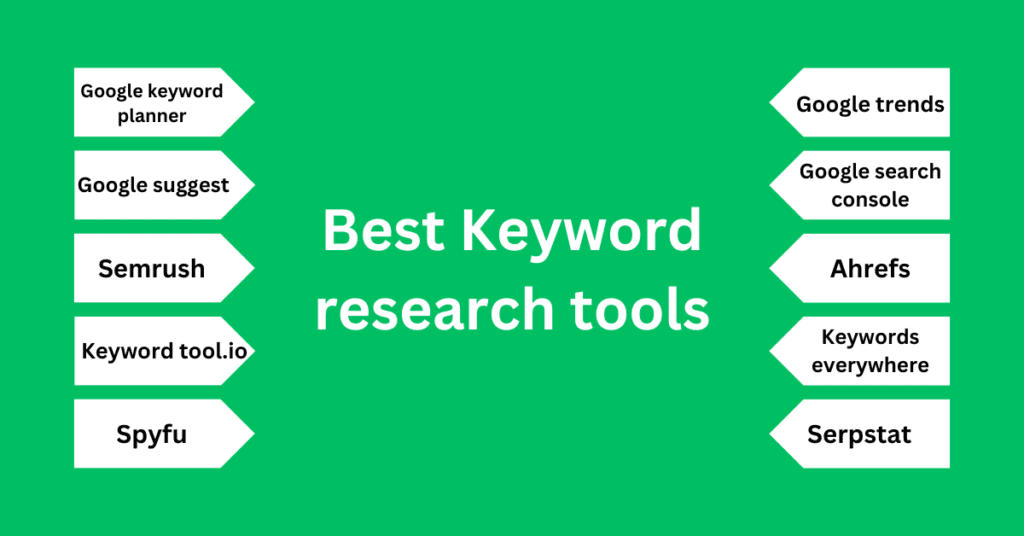
Free Tools That Do a Surprising Amount of Heavy Lifting
- Google Search Console: Shows you exactly which queries bring visitors to your site, your average ranking position, click-through rates, and any indexation problems. This one’s non-negotiable. Set it up before your first post
- Google Trends: Tells you whether a topic is growing or fading in search popularity. Brilliant for planning content before you invest time writing it.
- AnswerThePublic: Pulls out the actual questions people are typing around your keywords. Genuinely eye-opening for content ideas.
- Google’s autocomplete and the “People Also Ask” feature: often overlooked.
These are real search intelligence features hiding in plain sight, and they’re completely free.
Paid Tools That Are Actually Worth It
- Ahrefs: The gold standard for backlink analysis, keyword difficulty, and competitive research. Their Content Explorer and Site Explorer features alone justify the cost for most serious bloggers.
- Semrush: A solid all-in-one option with strong keyword intelligence, content auditing, and competitive analysis built in. Great pick if you want one tool that covers a lot of ground.
- Surfer SEO: Specifically focused on content intelligence. It tells you what to include in your article based on what’s already ranking, covering everything from keyword density to content length to semantic entities.
- Screaming Frog: A reliable tool widely used for in-depth technical SEO audits. The free version crawls up to 500 URLs, which is plenty for most small sites.
| Tool | Best For | Cost |
|---|---|---|
| Google Search Console | Tracking your own site’s performance | Free |
| Google Trends | Content trend spotting | Free |
| AnswerThePublic | Finding audience questions | Free (limited) |
| Ahrefs | Backlinks, keywords, competitive research | Paid |
| Semrush | All-in-one SEO platform | Paid |
| Surfer SEO | Content optimization | Paid |
| Screaming Frog | Technical site audits | Free up to 500 URLs |
Mistakes People Make When They Skip SEO Intelligence
Let me be straight with you. Before I really understood “what is SEO intelligence”, I made every single one of these mistakes. So did most of the clients I worked with during my time consulting for HubSpot’s partner network. These errors are expensive, not necessarily in money but in time and momentum.
Going after keywords that are way too competitive too early.
Writing about “digital marketing” when your site is two months old is like entering a sprint race against Olympic athletes. SEO intelligence shows you which races you can actually win right now.
Getting the search intent wrong.
Writing a product-focused page for an informational keyword. A short listicle for a query that wants a deep guide. Mismatched intent is a ranking killer, and it doesn’t matter how good your writing is.
Skipping semantic coverage.
Google doesn’t just scan for your target keyword. It reads your whole page for related concepts and entities. Write about “keto diet” without mentioning macros, net carbs, or meal prep, and your content looks shallow to the algorithm even if it’s well-written.
Publishing and walking away. The search results are changing.
Competitors create better products. Algorithm updates happen. SEO intelligence is an ongoing system, not a one-and-done task.
Getting distracted by big vanity numbers.
A keyword with 50,000 monthly searches sounds amazing until you see that every single ranking result is from a major media brand. SEO intelligence keeps you focused on realistic wins, not impressive-sounding dead ends.
A Simple SEO Intelligence System You Can Actually Stick To
You don’t need a full-time team to run this. Here’s a lean, realistic framework that works for bloggers, freelancers, and solopreneurs who are managing everything themselves:
Every Week:
- Spend 10 minutes in Google Search Console. Look for new ranking opportunities and any coverage errors that need fixing.
- Flag any queries where you’re sitting between positions 8 and 20. Those are your fastest-win optimization targets.
Every Month:
- Run a quick competitive check on two or three sites in your space. See what new content they’re publishing and where they’re gaining ground.
- Review your top five performing pages. Could you expand them, add a new section, update anything outdated, or build stronger internal links from newer posts?
Every Quarter:
- Revisit your content plan with fresh keyword intelligence data. Are you chasing trends that are actually growing? Any obvious content gaps still sitting there?
- Do a basic technical SEO health check. Fix critical issues before they quietly compound into bigger problems.
Once a Year:
- Step back and reassess your whole keyword strategy. Your domain authority grows over time. Topics that were out of reach 12 months ago might now be realistic targets.
Four to six focused hours a month, applied consistently, is enough to see real results. You don’t need to live in your analytics.
SEO Intelligence vs. Traditional SEO: Side by Side
A lot of people practice traditional SEO and genuinely wonder why their efforts aren’t producing results. Here’s the simplest way to understand the difference:
| What You’re Doing | Traditional SEO | SEO Intelligence |
|---|---|---|
| Keyword approach | Pick a target based on volume | Analyze intent, competition, trend direction, semantic depth |
| Content strategy | Write what seems relevant | Write topics with proven, data-backed demand |
| Competitor analysis | Skip it or barely skim | Central to every single content decision |
| Performance tracking | Check rankings now and then | Continuous monitoring with clear KPIs |
| Responding to changes | React after rankings drop | Adjust proactively based on trend and algorithm data |
| Technical health | Fix issues when someone points them out | Regular audits built into the routine |
Traditional SEO isn’t wrong. It’s just playing with half the information. SEO intelligence adds the data layer that makes your decisions predictive instead of reactive.
What SEO Intelligence Looks Like at Your Stage
Not everyone’s starting from the same place, so here’s how this actually applies depending on where you are right now:
You’re Just Starting Out
Your focus is keyword intelligence and search intent. Before you write anything, use Google’s autocomplete, AnswerThePublic, and Google Trends to find out what your audience is genuinely searching for. Pick low-competition, long-tail keywords. Read the top three ranking pages for every topic you’re considering before you start writing.
You’ve Got Some Traffic and Want More
Now you layer in competitive intelligence. Use Ahrefs or Semrush to find your content gaps, the topics your competitors rank for that you’ve missed. Go back to older posts that are stuck on page two and update them. Start building internal link clusters around your main topics.
You’re Running a Small Business
Your goal isn’t just traffic. Its customers. SEO intelligence for you means matching your keyword strategy to the different stages of your buyer’s journey, making sure your commercial-intent pages are fully dialed in, and tracking which organic queries are actually driving leads or sales, not just page views.
The Future of SEO Intelligence (And Why It’s Only Getting More Important)
Knowing what is SEO intelligence is more important than ever as Google’s AI Overviews reshape the search landscape. AI-generated summaries now appear above traditional results for a lot of informational queries, and that’s not going away.
Does that mean SEO intelligence matters less? Not even a little. It means the opposite.
The content Google pulls into those AI summaries comes from sources it already trusts, sites that demonstrate E-E-A-T. Experience, Expertise, Authoritativeness, and Trustworthiness. SEO intelligence is how you build that trust systematically instead of just hoping Google notices you.
It also helps you figure out which queries still drive real clicks through to external websites, because plenty of searches still don’t generate an AI Overview. Knowing the difference between “AI will answer this for them” and “people will click through for this” is itself a form of SEO intelligence.
Voice search, visual search, and conversational AI queries are all changing how people find things. The bloggers and business owners who track those shifts and adapt their strategy accordingly will keep building real audiences. The ones who stick with the same approach from five years ago will keep wondering why nothing’s working.
Conclusion: You Don’t Need to Be an SEO Expert to Use SEO Intelligence
Here’s the deal with SEO intelligence.
It’s not reserved for agencies, big marketing teams, or people with decades of experience. It’s a mindset shift that anyone can make, and the tools to support it are genuinely accessible.
The bloggers, freelancers, and small business owners who use SEO intelligence aren’t necessarily smarter or more talented than everyone else. They’re just making better-informed decisions before they invest their time and energy into content.
You don’t need to start with a fancy paid tool or a complicated system to understand what is SEO intelligence in practice. Start with Google Search Console this week. Research your next topic properly before you write it. Check the search intent of your target keyword. Read the pages that are currently ranking for it and ask yourself honestly: Is my planned content more useful, more complete, or more specific than what’s already there?
If the answer’s yes, and you’ve picked a keyword your site can realistically compete for, you’ve already started using SEO intelligence.
Do that consistently, keep refining your system as you grow, and the compounding effect on your traffic will surprise you.
The shift is simple. Stop writing and hoping. Start researching and knowing.
Frequently Asked Questions About SEO Intelligence
What’s the difference between SEO intelligence and regular SEO?
Regular SEO is a set of techniques: keyword research, on-page optimization, and building authority backlinks. SEO intelligence is the layer of ongoing data analysis and strategic thinking that makes those techniques actually work. It’s not a replacement for SEO. It’s what makes your SEO decisions smarter and more targeted.
Do I need to pay for tools to use SEO intelligence?
No. You can start with completely free tools like Google Search Console, Google Trends, and AnswerThePublic. They won’t give you everything, but they give you enough to start making data-informed decisions. Paid tools like Ahrefs and Semrush give you a bigger competitive edge, especially for keyword and backlink intelligence, but they’re not required on day one.
How long does it take to see results from using SEO intelligence?
Typically, three to six months before you see meaningful ranking improvements, and that’s pretty standard for organic SEO regardless of approach. The difference with SEO intelligence is that the results compound faster over time because your content decisions are better from the start. You’re not publishing content that was doomed before you hit publish.
Is SEO intelligence only useful for big websites?
Actually, it’s more useful for smaller sites. Big brands rank on authority alone a lot of the time. Smaller blogs and business sites have to be smarter about which battles they pick, which keywords they target, and which content gaps they fill. SEO intelligence is exactly the tool that helps level the playing field.
What if I’m a total beginner? Where do I actually start?
Start with Google Search Console. Set it up for your site if you haven’t already. Then, before you write your next blog post, look up your target keyword in Google, study the top three results, and ask yourself: what intent is this search serving, is this realistic competition for my site, and what could I add that’s not already covered? That’s it. That’s SEO intelligence in its simplest form.
Can I use SEO intelligence without being technical?
Yes. The technical layer of SEO intelligence matters, but it’s the last pillar, not the first. Start with keyword intelligence and search intent, which require no technical skills at all. Tools like PageSpeed Insights and Google Search Console surface technical issues in plain language when you’re ready to go there. You don’t need to know how to code.
What about using AI to write my content? Does that affect SEO intelligence?
AI can be a useful drafting tool, but it doesn’t replace SEO intelligence. It doesn’t know which keywords are realistic for your site, what your competitors are doing, or what search intent your audience has right now. SEO intelligence tells you what to write and why. AI can help you write it faster. Use them together, but don’t let AI make the strategic calls.
Want to keep learning? Check out our guides on keyword research for beginners, building a content strategy on a small budget, and how to use Google Search Console to find your first ranking wins.