You published your blog post. Hit share on LinkedIn. Refreshed your analytics every 11 minutes for three hours straight.
Sound familiar? Yeah. I’ve been there too. And I’ve watched brilliant freelancers, sharp solopreneurs, and genuinely talented small business owners pour their hearts into content that disappears. Not because their ideas were bad. But because nobody taught them the actual framework that makes content work.
Here’s the thing: inbound marketing isn’t about producing more. It’s about producing smarter, distributing strategically, and converting intentionally. And when you understand the 3 pillars of inbound marketing and build them correctly, you create a system that pulls customers toward you, instead of forcing you to chase them down like a desperate door-to-door salesman.
I’ve spent years consulting with growth teams at companies where paid acquisition budgets were enormous. But the most consistent, scalable, and frankly beautiful growth I’ve ever witnessed? It always came from inbound. Every. Single. Time.
So let’s build your system from scratch.
What Inbound Marketing Actually Means (Because Most People Get This Completely Wrong)
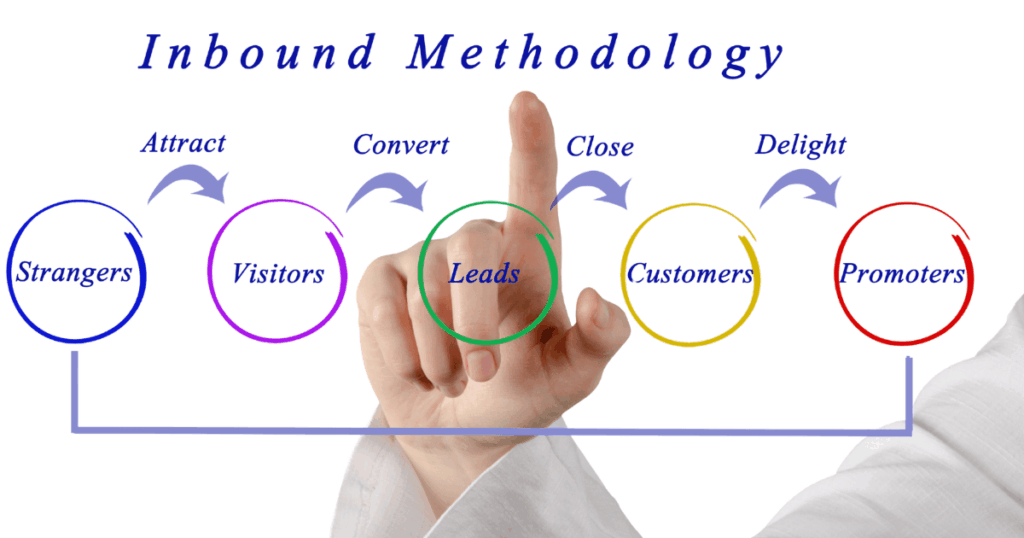
Before we get into the 3 pillars of Inbound marketing, let’s kill a myth real quick.
Inbound marketing is not just blogging. It’s not just SEO. And it’s definitely not just posting on Instagram three times a week and crossing your fingers.
Inbound marketing is a philosophy before it’s a tactic. The core idea is simple: create genuine value for people who are already looking for what you offer, and they’ll come to you, trust you, and eventually buy from you.
The opposite of inbound is outbound, which is cold calls, spam emails, pop-up ads, and all those interruption-based tactics you personally hate receiving. Outbound screams at strangers. Inbound puts up a magnet and lets the right people walk toward you.
HubSpot, the company that practically invented the term, organizes inbound marketing around a flywheel: attract, engage, delight. But underneath that flywheel are 3 pillars of inbound marketing that make the whole thing actually spin. Those pillars are Content, SEO, and Lead Nurturing.
Get all three working together? Your blog becomes a business asset that generates leads while you sleep. Miss even one? You’ve got a leaky bucket, and no amount of effort will fill it.
Pillar 1: Content, The Engine That Attracts the Right Strangers
Let’s start with the one everyone thinks they already understand.
Content is not just your blog posts. It’s every piece of value you put into the world: your YouTube videos, your email newsletters, your LinkedIn posts, your free templates, your podcast episodes, your case studies. All of it counts.
But here’s where beginners get stuck, and I mean really stuck. They create content they want to make instead of content their audience is desperately searching for at midnight with a headache and a deadline.
There’s a massive difference between those two things.
How to Create Content That Actually Pulls People In
The secret weapon here is called search intent mapping. Before you write a single word, ask yourself: what does my ideal reader type into Google when they’re frustrated, stuck, or trying to solve something specific? This is exactly why the 3 pillars of inbound marketing start with content, because content built around real search intent doesn’t just get read. It gets found.”
Here’s a simple framework I call the 3P Content Filter:
- Problem-aware content: Targets people who know they have a problem but haven’t found the solution. Think: “Why is my website getting no traffic?”
- Product-aware content: Targets people comparing options. Think: “Inbound vs outbound marketing for small businesses.”
- Pain-point content: Speaks directly to emotional frustration. Think: “How to get clients without cold emailing strangers.”
Every piece of content you create should fit into one of these three buckets. If it doesn’t, you’re probably writing for yourself, not your audience.
The Content Types That Actually Drive Inbound Traffic
Not all content formats work the same way. Here’s a breakdown of what works and when:
| Content Type | Best For | Awareness Stage |
|---|---|---|
| Long-form blog posts (1500+ words) | SEO and trust building | Awareness |
| How-to guides and tutorials | Capturing search traffic | Awareness and Consideration |
| Case studies | Building real credibility | Consideration |
| Email newsletters | Nurturing existing leads | Decision |
| Free tools or templates | Lead generation | All stages |
| Video walkthroughs | Breaking down complex ideas | Awareness |
If you’re a beginner blogger or freelancer, start with long-form blog posts plus one lead magnet (a free checklist, template, or mini-guide). That combination alone can start generating consistent traffic within 90 days if you’re targeting the right keywords.
Consistency Beats Perfection. Always.
Early in my career, I obsessed over writing one “perfect” post per month. That was a mistake. Publishing two well-researched, genuinely useful posts per week outperforms one monthly “masterpiece” every single time, because search engines reward freshness and topical authority.
You don’t need to go viral. You need to become the most trusted resource in your niche. And that’s precisely what the 3 pillars of inbound marketing are designed to do: help you build slow, steady, and genuinely useful authority that wins the race every time.
Free Articles From Other Writers Are Quietly Killing Your Brand
Okay, real talk. Let’s pause here because this needs to be said out loud.A lot of bloggers and solopreneurs, especially when they’re starting and feeling overwhelmed, decide to fill their website with free guest posts, syndicated content, or articles from random contributors. The logic sounds reasonable: more content, faster growth, less work for me.
That logic is wrong. And it’s costing you.
Here’s my controversial opinion: free articles from outside writers are almost always a liability, not an asset, especially for beginners and small business owners.
Why? Let me break it down:
- Your voice disappears. The whole point of inbound marketing is building trust with a specific person, which is you. The moment your blog starts sounding like five different people wrote it, readers stop connecting. They came for your perspective, not a committee’s.
- Quality control is a nightmare. Free contributors aren’t invested in your brand. They’re often submitting the same recycled article to ten different blogs. That “free” content frequently contains outdated information, weak sources, or, even worse, subtle links to spammy websites buried in the text.
- Google has gotten very good at detecting low-effort syndicated content. Thin, generic, or duplicated articles don’t just fail to help your SEO. They actively hurt it. A few bad articles from outside contributors can drag down the authority of your entire domain.
- It signals to your audience that you don’t have time for them. Nothing says “I’m not that invested in this blog” quite like publishing an article that was clearly written by someone who has never visited your website.
Now, am I saying guest posting is always evil? No. A thoughtfully written guest post from someone who genuinely knows your audience and respects your editorial standards can be incredible. But that’s rare. And “free” rarely comes with those standards attached.
The better move:
Write less, own every word, and make each piece genuinely yours. One real, authentic post per week beats five forgettable filler articles every single time.
Your brand is your voice. Don’t outsource it for free.
Pillar 2: SEO, The Invisible System Working While You’re Sleeping
Content without SEO is like a billboard in the middle of the desert. Beautifully designed but completely pointless. SEO, which stands for Search Engine Optimization, is the second of the 3 pillars of inbound marketing. It is the process of making your content findable by the exact people who are already looking for it. And for solopreneurs and small business owners without massive ad budgets, it’s genuinely one of the highest-ROI activities you can invest time into.
Let’s break this into three layers, because SEO has this reputation for being complicated, and it really doesn’t have to be.
Layer 1: Keyword Research (Finding What Your People Are Actually Typing)
Keyword research is not about chasing words with the highest search volume. That’s a trap that swallows beginners whole. A keyword like “marketing” gets millions of monthly searches, but you’ll never rank for it. You’re up against HubSpot, Neil Patel, Forbes, and every major publication on earth.
What you actually want are long-tail keywords: specific phrases with lower volume, high intent, and manageable competition.
Check out the difference:
| Approach | Keyword Example | Monthly Volume | Difficulty | Conversion Potential |
|---|---|---|---|---|
| Beginner mistake | “digital marketing” | 500,000+ | Extremely high | Very low |
| Smart inbound move | “inbound marketing strategy for freelancers” | 800 | Low | Very high |
The second keyword is typed by someone who knows exactly what they want. They’re close to taking action. They are literally your person.
Free tools to start your keyword research right now:
- Google Search Console: Free, shows what you’re already ranking for.
- Ubersuggest: Beginner-friendly with solid keyword data.
- AnswerThePublic: Great for finding real questions real people ask.
- Google’s “People Also Ask” box: Criminally underused and completely free.
Layer 2: On-Page SEO (The Stuff That Sounds Technical But Really Isn’t)
Once you’ve got your keywords, here’s what to actually do with them:
- Title tag: Your primary keyword should appear naturally in the first 60 characters.
- Meta description: Write it for humans. Make it interesting. Keep it under 160 characters.
- H1 and H2 headings: Use your keyword and related phrases naturally throughout.
- Internal linking: Link to your own relevant content. This keeps readers on your site longer and tells Google you know your topic deeply.
- Image alt text: Describe your images accurately. Include a keyword where it genuinely fits.URL structure: Keep it clean. “/3-pillars-inbound-marketing” beats “/blog/post?id=4827” by a mile.
Layer 3: Off-Page SEO (Building Authority Beyond Your Own Site)
Here’s where most beginners completely stall out. They optimize everything on their site and then wait for Google to notice them. But mastering the 3 pillars of inbound marketing means understanding that Google notices authority, and authority comes from other credible websites linking back to yours, which are called backlinks. You don’t need hundreds of them. You need a few good ones. Here’s how to build them without spending a dollar:
- Guest posting: Write genuinely valuable content for other blogs in your niche. Include a link back to your site in your author bio or naturally in the content.
- Digital PR: Create original research or data. Journalists love a good stat and will link to your source.
- Resource page outreach: Find “best resources” roundup pages in your niche and pitch your content as a worthy addition.
- HARO: Help a Reporter Out lets you respond to journalist queries. Get quoted. Get linked.
One solid backlink from a high-authority website does more for your SEO than 50 low-quality directory listings. Quality over quantity. Always.
Pillar 3: Lead Nurturing, Converting Readers Into Buyers Without Being That Person
Okay so. You’ve created brilliant content. You’ve optimized it. People are finding you, reading your posts, nodding enthusiastically at their screens.
And then they leave. That’s the inbound marketing leak that quietly kills most solopreneurs. They build a solid attract system but completely ignore the convert system. Lead nurturing is the process of staying in touch with your audience over time, providing ongoing value, and gently guiding them toward a decision when they’re ready.
Without it, you’re just farming traffic for Google. Not building a business.
The Lead Magnet: Your Permission Slip to Stay in Touch
The first step in lead nurturing is capturing an email address. And you can’t do that without offering something genuinely useful in return.
Your lead magnet should:
- Solve one specific, immediate problem
- Be quick to consume (a checklist beats a 50-page ebook in most cases)
- Be directly connected to the content that brought people to your site
- Deliver a quick win that makes someone think, “If the freebie is this good, the paid stuff must be incredible.
Some high-converting lead magnet ideas for bloggers and solopreneurs:
- A content calendar template for new bloggers
- A client onboarding checklist for freelancers
- A “10-minute SEO audit” guide for small business owners
- A swipe file of pitch email templates
- A budget planner spreadsheet for solopreneurs
The Email Sequence: Where the Real Relationship Gets Built
Once someone joins your list, you’ve got a narrow window of high engagement, usually the first 7 to 14 days, to make a real impression. Here’s a simple 5-email welcome sequence that actually works:
- Email 1 (Immediate): Deliver the lead magnet. Say thank you. Tell them what’s coming next.
- Email 2 (Day 2): Share your single best piece of content. Tell a bit of your story. Be a real human.
- Email 3 (Day 4): Ask about their biggest struggle. Create a real two-way conversation.
- Email 4 (Day 6): Share a case study or a success story. Show that your approach actually works.
- Email 5 (Day 8): Make a soft, low-pressure offer. Introduce your product or service without pushing.
This sequence doesn’t sell. It serves. And when people feel genuinely served, buying feels like the natural next step, not a transaction.
Segmentation: Stop Talking to Everyone the Same Way
A common mistake I see is treating an entire email list as if everyone on it is the same.Your list has beginners who need foundational help and intermediate readers who want more tactical depth. Sending the same email to both groups frustrates everyone.
Use simple segments based on:
- What lead magnet did they downloaded: This tells you what problem they’re trying to solve.
- What content they clicked: This tells you what topics get them excited.
- How engaged they are: Active readers vs. subscribers who haven’t opened anything in 60 days.
Most email platforms, including Mailchimp, ConvertKit, and ActiveCampaign, make basic segmentation pretty straightforward. Even just two segments, “new subscribers” and “engaged readers,” will noticeably improve your open and click-through rates.
How the 3 Pillars of Inbound Marketing Work Together
Let me paint you a picture.
You write a 1,800-word blog post targeting “inbound marketing strategy for freelancers.” You optimize it properly: clean URL, strong title, internal links, and a compelling meta description. You add a call-to-action halfway through, offering a free “Inbound Marketing Checklist for Freelancers.”A freelancer in Austin is struggling to land consistent clients. She types that exact phrase into Google at 10 pm. Your post shows up on page one. She reads every word. She downloads your checklist.
She’s on your list now.
Over the next two weeks, you will send five emails. You share a case study. You ask what she’s struggling with. She replies. An actual conversation starts. On day eight, you mention your coaching program.
She signs up.
That entire journey, from Google search to paying client, happened without a single paid ad. No cold outreach. No awkward DMs. No discount codes are desperately blasted to a cold audience.
That’s the 3 pillars of inbound marketing working as one system. Content attracted her. SEO delivered her. Lead nurturing converted her. Remove any one pillar and the system collapses.
Where to Start When You’re Feeling Overwhelmed
If you’re staring at this and feeling paralyzed, here’s what I’d tell you straight: don’t try to build all three pillars at once.
Start with content. Pick one keyword. Write one genuinely helpful blog post. Publish it. Do that consistently for 30 days before stressing about anything else. Then layer in basic on-page SEO. Just the fundamentals: a good title, a clean URL, and one internal link per post. Then build your lead magnet. One simple checklist. A free email tool like Mailchimp. Two welcome emails.
That’s your 90-day starter plan. Nothing more complicated than that. The solopreneurs and small business owners I’ve watched grow the fastest didn’t have the biggest budgets. They had the most consistent systems. They showed up, optimized, nurtured, and let the compound effect do its thing.
Conclusion: Your Audience Is Already Out There Searching for You
Here’s what it all comes down to.
Content without SEO is invisible. SEO without content is empty. Both without lead nurturing are just traffic with nowhere to go and nobody following up. But when you stack all 3 pillars of inbound marketing properly? You’ve got a machine that runs whether you’re working or not. You attract the right people with content that genuinely helps them. You make that content findable through smart SEO. You build a real relationship through email, earn trust over time, and give your audience a natural path to buying from you.
It’s not a get-rich-quick scheme. Nothing worth building ever is. But it’s sustainable. It’s scalable. And it’s the single most powerful marketing approach I’ve seen work consistently for bloggers, freelancers, solopreneurs, and small business owners who don’t have a massive team or a fat ad budget.
Start with one pillar. Build the second. Stack the third. Your audience is already searching for exactly what you offer. The only question is whether they find you or your competitor.
Let’s make sure they find you.
Frequently Asked Questions About Inbound Marketing
Q1: How much time does it take to see results from inbound marketing?
Honestly? Longer than most people want to hear. SEO-driven content typically takes 3 to 6 months to gain real traction. But the beautiful thing about inbound is that the results are cumulative. A blog post you write today can generate leads two years from now. Paid ads stop the moment you stop paying. Good inbound content keeps working.
Q2: Do I need a big email list for lead nurturing to work?
Not at all. I’ve seen solopreneurs with a list of 200 people generate consistent monthly revenue because they nurtured that small audience well. A small, engaged list beats a massive, indifferent one every single time.
Start making your list from day one, even if you only have 10 subscribers.
Q3: Does inbound marketing still matter now that AI-generated content is everywhere?
This is actually a great reason why authentic, voice-driven inbound content matters more right now. AI can produce volume. It can’t produce you. Your unique viewpoint, your actual experiences, and your authentic self – that’s what sets you apart in a sea of sameness. Embrace what makes your voice distinct.
Q4: Does inbound marketing actually work for businesses that provide services, not just for people who write blogs?
Absolutely. Freelancers, consultants, coaches, designers, accountants, and pretty much anyone who sells expertise can use inbound marketing effectively.
Your content demonstrates your knowledge. Your SEO makes sure potential clients find you. Your email nurturing builds the trust that converts a reader into a client.
Q5: Do I need to be on every social media platform to make inbound marketing work?
Nope. Pick one or two platforms where your specific audience actually hangs out and show up consistently there. Trying to be everywhere dilutes your energy and your message. A small business owner who posts three times a week on LinkedIn and sends a weekly email newsletter will outperform someone frantically trying to manage Instagram, TikTok, Twitter, Pinterest, and a YouTube channel all at once.
Q6: What’s the biggest mistake beginners make with the 3 pillars of inbound marketing?
Treating these 3 pillars of inbound marketing as separate projects instead of one connected system. They write content without thinking about SEO. They get traffic without capturing emails. They build a list without nurturing it. The real power kicks in when all three work together. Start simple. Build the connections between them early. And don’t let perfection stop you from publishing.